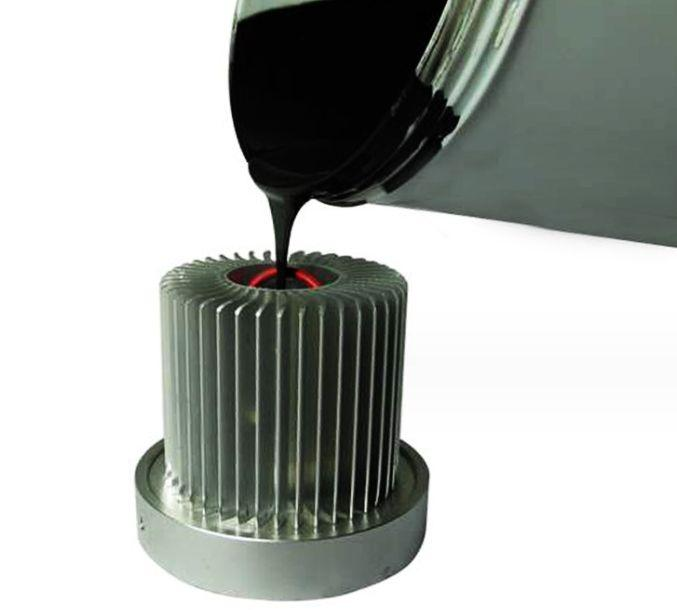



For high-quality electronic potting compounds, thixotropy and weather resistance are two indispensable core properties, directly determining their performance, operational efficiency, and lifespan. They also need to be combined with other key properties to meet the encapsulation requirements of various electronic components.
I. Thixotropy: The "Basic Operational Guarantee" of Electronic Potting Compounds
Thixotropy is crucial for electronic potting compounds, forming the basis for efficient application and reliable sealing. Potting compounds with good thixotropy can be quickly applied via extrusion, spraying, etc., without delaying the work schedule. Furthermore, they maintain their original color and stable performance after application, without issues such as sagging or collapse.
If the potting compound lacks thixotropy, it will not only affect application efficiency but also directly compromise sealing. Even after pouring according to standard procedures, it will still be susceptible to external environmental influences, failing to effectively prevent the intrusion of moisture, dust, air, and other impurities. This can lead to rust and leakage in electronic components, ultimately rendering them unusable and causing a series of equipment malfunctions.
II. Weather Resistance: The Key to Durability in Outdoor and Complex Environments
High-quality electronic potting compounds must possess excellent weather resistance, a core prerequisite for their adaptability to various usage environments. They must withstand extreme temperature fluctuations and long-term UV exposure, maintaining stable performance even after prolonged use in complex outdoor environments, without aging, cracking, or performance degradation, ensuring the long-term normal operation of electronic components.
III. Other Key Performance Requirements for Electronic Potting Compounds
High-quality electronic potting compounds must also meet the following core performance requirements to fully guarantee the encapsulation effect:
* Excellent Sealing: Completely encapsulates electronic components, forming an airtight protective layer, isolating them from various external interference factors and preventing damage to the components;
* Good Rheological Properties (Self-Leveling): Self-leveling after pouring without human intervention, ensuring a uniform adhesive layer and preventing uneven curing from affecting the curing effect, thus ensuring the normal performance of other properties.
In summary, when purchasing electronic potting compounds, users need to fully understand their core performance characteristics and ideally conduct a trial run in advance to observe their performance after curing. This will ensure that the compounds meet their actual usage needs and provide reliable protection for electronic components.