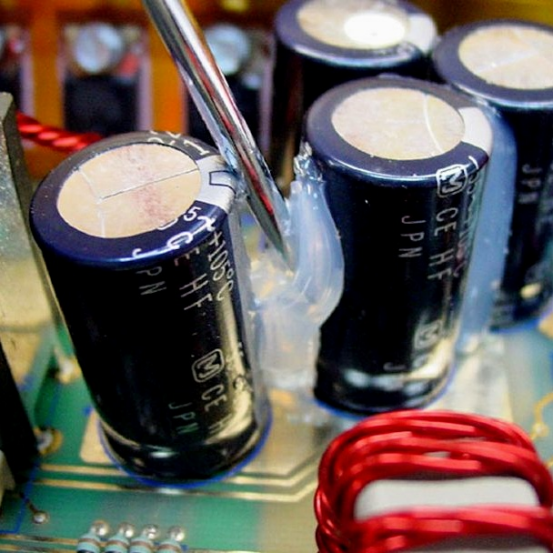

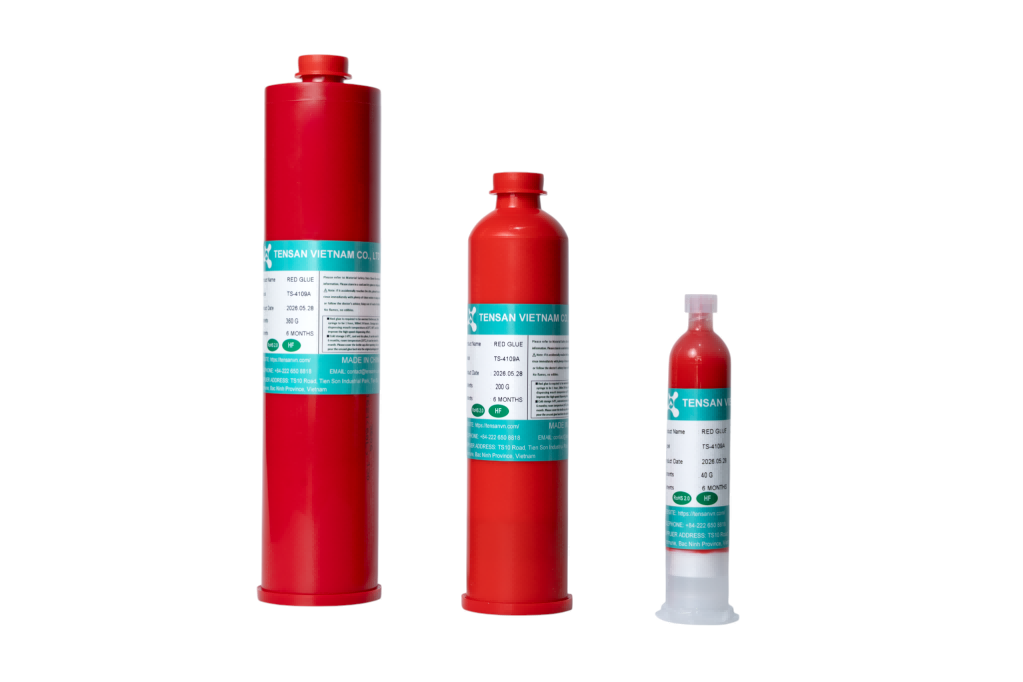


In the electronics industry, silicone adhesives primarily serve core functions such as sealing, fixing, and filling. Their full performance depends on the complete curing of the adhesive. To ensure normal and thorough curing of silicone adhesives, it is crucial to focus on various influencing factors during the deep curing process. The following will break down the key influencing factors and their specific mechanisms.
I. Humidity of the Application Environment
The silicone adhesives discussed in this article specifically refer to single-component condensation-type products. Their curing process relies heavily on moisture in the air to trigger the condensation reaction. The presence and concentration of moisture directly determine the curing effect. Insufficient or low humidity will significantly slow down the condensation reaction rate, preventing the adhesive from curing completely within the specified time. For example, in a standard environment with 55% humidity, the deep curing thickness of the adhesive can reach 4-5 mm within 24 hours; however, if the ambient humidity is only 30%, the curing depth will be significantly insufficient. If the required application thickness is 4 mm, the adhesive will fail to form initially, affecting subsequent use.
II. Adhesive Application Thickness
The curing of single-component silicone adhesives involves five stages: surface drying, skinning, deep curing, initial overall curing, and complete curing. Under consistent environmental conditions, adhesive application thickness is positively correlated with curing time—the thicker the application, the longer each curing stage takes. The core reason is that deep curing requires sufficient contact between the adhesive and air to absorb moisture; increasing the application thickness significantly increases the difficulty of this contact, thus prolonging the curing cycle. Therefore, for the same type of adhesive used in the same environment, the curing time for different application thicknesses needs to be adjusted flexibly.
III. Adhesive Intrinsic Properties
The curing performance of the adhesive itself is mainly reflected in curing speed and curing strength, both of which directly affect deep curing efficiency. Generally, silicone adhesives with faster surface drying speeds and higher curing strengths also tend to have faster overall curing speeds. Therefore, when selecting fast-curing silicone adhesives, surface drying time and skinning time can be used as key reference indicators to determine whether their deep curing efficiency meets the application requirements.
In summary, a thorough understanding of the factors influencing the deep curing of single-component silicone adhesives is of great guiding significance for practical applications. It can effectively prevent problems such as uncured internal adhesives and substandard performance when products are delivered to end customers, thus ensuring the assembly quality and lifespan of electronic products.