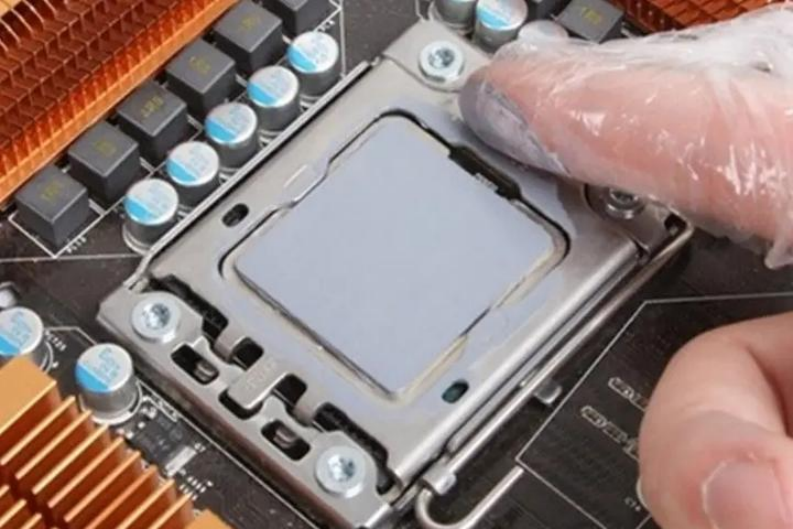



Electronic products are prone to generating high temperatures during operation, which not only significantly reduces equipment lifespan but also easily leads to downtime. Traditional heat dissipation solutions are difficult to adapt to high-power heat dissipation requirements. Thermal grease, with its excellent thermal conductivity and filling capabilities, has become a core heat dissipation consumable. Its thermal conductivity directly determines the overall heat dissipation efficiency. The following are the key factors affecting its thermal conductivity:
I. Oil Separation Rate (Oil Leakage Rate)
Thermal grease is made by mixing silicone oil base material with thermally conductive powder filler. If the two have poor compatibility, silicone oil is prone to separation and leakage. While short-term oil separation can be stirred and reused, after being applied to heat-generating devices, the silicone oil will continue to precipitate and leak out under long-term high-temperature environments, eventually leaving only solid thermally conductive powder. This can lead to the paste drying, cracking, powdering, and hardening, completely blocking heat conduction and significantly reducing heat dissipation effectiveness. The lower the oil separation rate, the stronger the thermal stability.
II. Overall Viscosity
Viscosity is determined by the base material ratio and the amount of thermally conductive filler added. A higher filler content results in higher silicone grease viscosity and a higher theoretical thermal conductivity. However, viscosity is not directly equivalent to thermal conductivity. Excessively high viscosity makes it difficult to apply evenly, while excessively low viscosity leads to flow and deviation, both resulting in poor adhesion and indirectly reducing actual thermal conductivity.
III. Adhesion and Adhesion:
Thermal grease is a non-curing heat dissipation material with no adhesive or curing effect. Here, adhesion specifically refers to surface adhesion. If the paste is too dry and has poor adhesion, it cannot tightly adhere to the heating and cooling surfaces, leaving a large air layer at the contact surface. Air has extremely poor thermal conductivity, preventing rapid heat transfer and easily causing grease to peel off and delaminate from the substrate, severely weakening the actual heat dissipation effect.
IV. Core Raw Material and Filler Ratio:
This is the fundamental factor determining thermal conductivity. Different thermally conductive fillers, such as alumina, zinc oxide, boron nitride, and graphene, have vastly different thermal conductivity. A low filler ratio results in insufficient heat conduction channels and weak thermal conductivity. An imbalanced ratio can also directly cause various quality problems such as oil seepage and drying.
V. Coating Thickness
Thermal grease is only used to fill tiny gaps on the contact surface; thicker application does not necessarily mean better heat dissipation. An excessively thick coating will form an insulating layer, increasing thermal resistance and hindering heat transfer; an insufficiently thin coating will not fill the gaps, leaving air pockets. A standard, thin, and uniform coating thickness is necessary for optimal thermal conductivity.
VI. Thixotropy
High-quality thermal grease has good thixotropy, flowing easily under pressure but not dripping when stationary. It is easy to spread during application and will not overflow or shift after installation. Grease with poor thixotropy tends to flow, shift, and accumulate unevenly, leading to gaps and localized heat dissipation failure over time.
VII. Application Process
The operator's application technique, uniformity, and cleanliness all affect thermal conductivity. Dust, oil, or oxide layers on the substrate surface, applied without proper cleaning, will obstruct heat conduction; uneven application, missed areas, and inconsistent thickness will create heat dissipation dead zones.