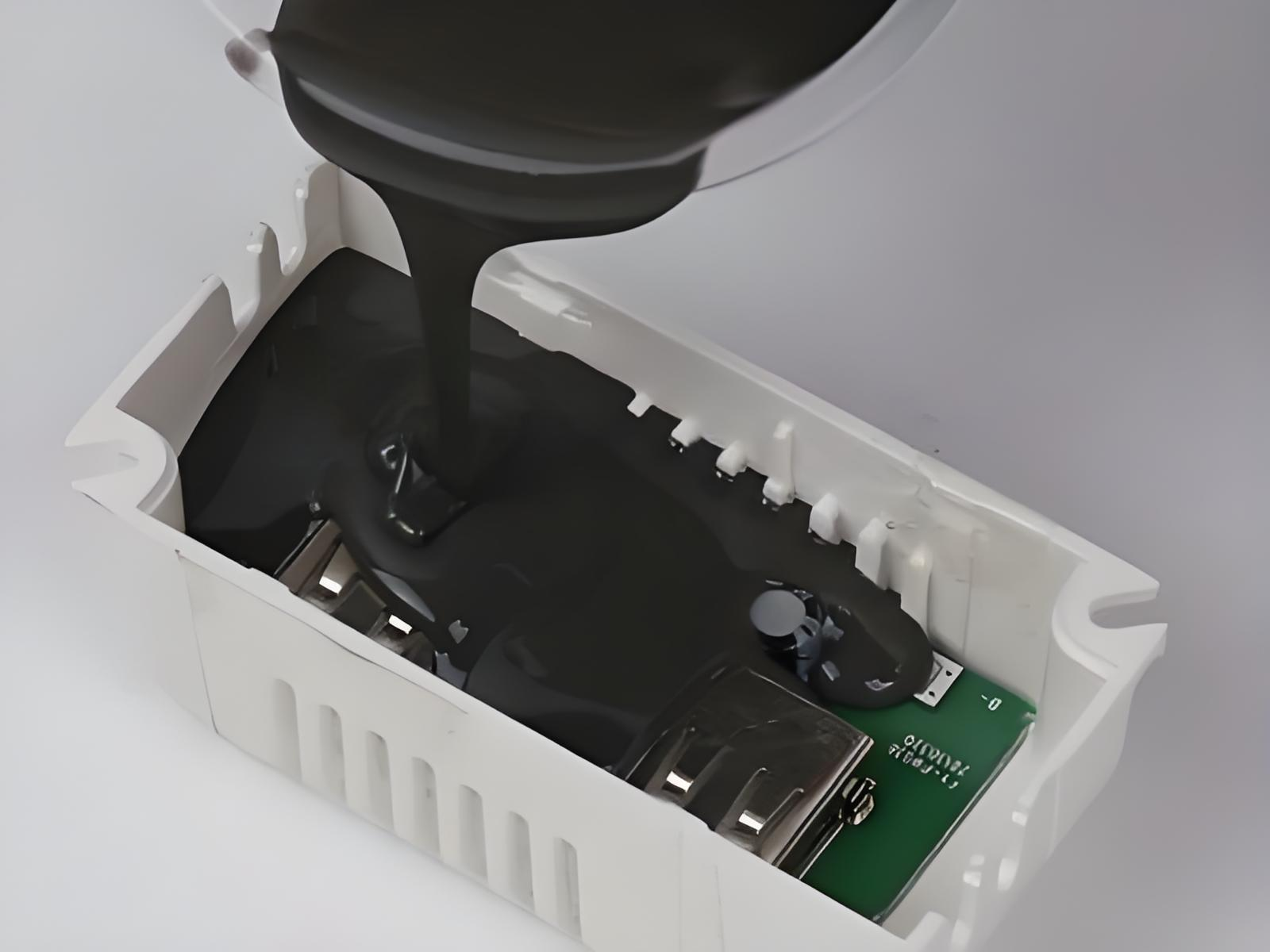
In the electronics industry, encapsulation is a critical process. As a core packaging material, thermal conductive encapsulants secure electronic devices and integrated circuit components while providing waterproofing, dustproofing, corrosion resistance, shock absorption, impact resistance, and stabilisation of component parameters. However, with numerous encapsulant types available, many users find selection challenging. Below we explain how to choose the appropriate electronic encapsulant based on specific requirements.
I. Screening by Functional Requirements
First, clarify core requirements: whether thermal conductivity is needed, and the desired gel state (flowing, non-flowing, or semi-flowing). Next, match product characteristics and manufacturing processes to confirm essential thermal conductivity needs. Finally, consider operating temperatures, environments, and substrates to align gel viscosity with curing processes. As potting compounds are liquid prior to curing, different substrates necessitate significantly varied processing techniques. Epoxy potting compounds exhibit weaker thermal conductivity but excel in waterproofing. Silicone potting compounds offer superior moisture resistance while emphasising thermal conductivity, electrical insulation, and shock resistance.
II. Characteristics and Applications of Mainstream Potting Compounds
-
Thermally Conductive Silicone Encapsulants: Two-component shrink-type formulations suited for high thermal dissipation requirements. Exhibits excellent physical properties and solvent resistance. Cures at room temperature or accelerates curing with heat after 1:1 mixing. Features low shrinkage, no exothermic reaction or by-products, and can be repaired whilst achieving deep curing into an elastomer. Suitable for PC, PP, ABS plastics and metal surfaces, meeting thermal conductivity, insulation, moisture resistance and flame retardancy (UL94-V0 rating) requirements for electronic components. Commonly used for encapsulating electrical components and temperature sensors.
-
Polyurethane potting compound (PU potting compound): Features moderate adhesion and good elasticity, combining shock resistance, moisture protection, and high transparency. Offers excellent electrical insulation and flame retardancy without corroding components. However, its temperature resistance does not exceed 100°C, and it is prone to bubbling, necessitating vacuum casting. Suitable for encapsulating small to medium-sized components such as solid-state voltage regulators, capacitors, electronic transformers, and relays.
-
Epoxy potting compound: Based on epoxy resin, it typically hardens to a rigid state though some variants remain flexible. It offers strong adhesion, high strength, and excellent insulation properties, with a temperature resistance of approximately 120°C. Drawbacks include poor thermal conductivity, susceptibility to ageing and cracking under prolonged high temperatures, and limited repairability. Suitable for sealing electronic transformers, LED driver power supplies, printed circuit boards, and similar components requiring confidentiality, insulation, and moisture protection.