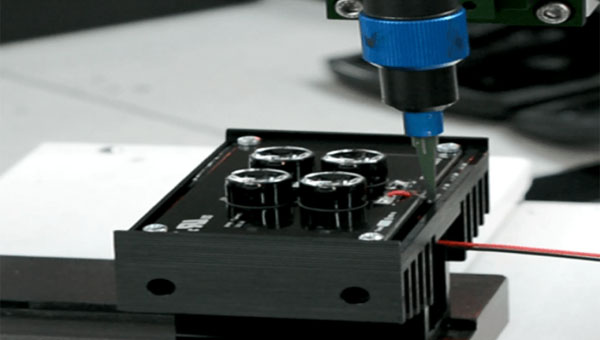



Thermal conductive potting compounds are primarily employed in the bonding, sealing, potting, and post-maintenance stages of power batteries. Prior to curing, they exist in a liquid state with excellent flowability, though their viscosity varies according to material properties, functional requirements, and production processes. Once fully cured, these compounds deliver their full application value, providing power batteries with multifaceted protection: waterproofing, dustproofing, insulation, thermal conductivity, corrosion resistance, and shock absorption.
I. Thermal Conductivity: The Core Heat Dissipation Metric
As electronic precision continues to advance, various electronic components generate substantial heat during operation. Failure to dissipate this heat promptly can readily cause component overheating, malfunctions, and consequently shorten the service life of electronic appliances. Thermal conductivity serves as the key metric for evaluating a material's ability to conduct and dissipate heat. Higher values indicate superior thermal management, enabling rapid removal of component-generated heat and effectively extending the operational lifespan of electronic products. Consequently, silicone sealants with high thermal conductivity demonstrate greater market competitiveness.
II. Electrical Properties: Ensuring Insulation Safety
Dielectric strength serves as a vital parameter for evaluating a material's insulating properties; higher values indicate superior insulation quality. Volume resistivity, meanwhile, characterises a material's impedance to current flow per unit volume, with elevated values signifying enhanced efficacy as an electrical insulator. Silicone sealants possess outstanding electrical insulation properties. When encapsulated within electronic devices, they significantly improve insulation between internal components and circuits, thereby safeguarding the operational safety of power batteries.
III. Mechanical Properties: Enhancing Structural Stability
Tensile strength serves as a core indicator of silicone potting compound's mechanical robustness, directly reflecting its toughness. Should the cured compound exhibit excessive brittleness, its capacity to withstand external vibrations and impact forces diminishes significantly. This vulnerability may lead to cracking or delamination, thereby compromising protection for power batteries. Therefore, robust mechanical strength is a fundamental prerequisite for silicone potting compounds to fulfil their protective function.
The above represents the key performance metrics for evaluating silicone potting compounds. With the current market offering a diverse array of silicone sealing products of varying quality, we recommend TENSAN as a manufacturer. Specialising in high-performance thermally conductive potting compounds, their silicone potting solutions comprehensively meet all the aforementioned performance requirements and are suitable for diverse applications within power batteries.