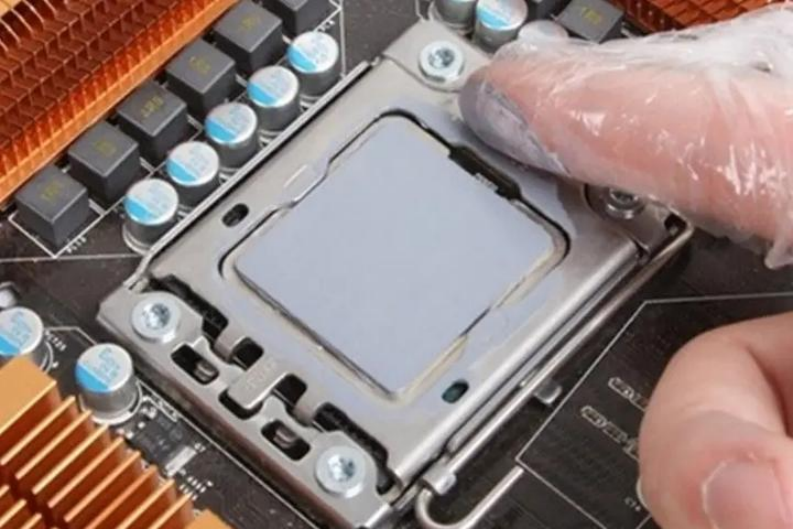



During the daily use of electronic products, issues such as overheating, performance lag, and motherboard burnout are common malfunctions. When disassembling devices for troubleshooting, one often discovers that the surface of the thermal paste has dried out and cracked. As the critical medium for heat conduction, the condition of thermal paste directly determines heat dissipation efficiency and the service life of electronic products; once cracking or pulverization occurs, the heat dissipation function is severely compromised. Based on practical application scenarios, the cracking of thermal paste is not a random occurrence; it is primarily caused by three core factors: insufficient mixing prior to application, residual low-molecular-weight components in raw materials, and an excessive oil separation rate in the product. The specific causes are broken down as follows:
I. Insufficient Mixing Prior to Application: Local Imbalance of Oil and Powder Leads to Cracking
Thermal paste is inherently a colloidal mixture of silicone oil and thermally conductive powder. During static storage, it is highly susceptible to stratification—where the oil and powder separate—which is a normal physical phenomenon. However, if the paste is not thoroughly stirred and mixed prior to use, applying or screen-printing it between the chip and the heat sink can result in localized areas containing an excess of powder and a deficiency of silicone oil.
Electronic products continuously generate high temperatures during operation. In areas where silicone oil is scarce, the oil-retention capacity is extremely poor. Under prolonged high-temperature conditions, the remaining small amount of silicone oil will slowly leach out and evaporate. Consequently, the colloid gradually loses its lubricating and adhesive properties, eventually leading to the drying out and pulverization of the powder components, which in turn forms fine cracks and results in a complete loss of thermal conductivity.
II. Inferior Raw Materials: Residual Low-Molecular-Weight Silicone Oil Exacerbates High-Temperature Cracking
Silicone oil, the fundamental raw material for thermal paste, has a purity and molecular structure that directly determine the product's durability. High-quality silicone oil consists of high-molecular-weight polymers characterized by strong stability and resistance to high-temperature volatilization. However, during the synthesis of silicone oil, low-molecular-weight byproducts are inevitably generated. If the manufacturing process is substandard—specifically if these low-molecular-weight components are not thoroughly removed—they will remain mixed within the finished silicone oil product.
When thermal paste produced using such inferior raw materials is subjected to the high-temperature operating conditions of electronic products, the internal low-molecular-weight substances will rapidly evaporate. This evaporation process disrupts the internal structure of the colloid, causing abnormal expansion and structural loosening. Once the expansive force exceeds the colloid's inherent toughness, cracking and detachment occur directly, resulting in a complete loss of the paste's ability to maintain contact and facilitate heat dissipation.
III. Excessive Oil Separation: Rapid Silicone Oil Bleeding Leads to Compound Drying and Shrinkage
Oil separation rate is a critical metric for assessing the long-term stability of thermal grease; it reflects the bonding strength between the silicone oil and the thermal filler particles. Products utilizing different formulations and manufacturing processes can exhibit vastly different oil separation rates. A higher oil separation rate indicates poorer compatibility between the silicone oil and the filler particles, making it easier for the oil to bleed out of the compound and detach from the particles under high-temperature conditions.
When a significant amount of silicone oil bleeds out, the thermal filler particles lose the protective encapsulation and binding provided by the oil, causing the compound to dry out and shrink rapidly. Once this drying and shrinkage reach a certain threshold, cracks will form—or in severe cases, the entire compound may crumble into powder and detach from the surface. Conversely, a lower oil separation rate signifies stronger oil-retention capabilities; this makes the thermal grease less susceptible to drying and cracking, thereby extending its operational lifespan.
The Core Risks of Cracking and the Challenges of Detection
Regardless of the underlying cause, once thermal grease cracks or turns powdery, it leads directly to a precipitous drop in thermal conductivity and a drastic decline in heat dissipation efficiency. This exacerbates overheating issues in electronic devices, triggers CPU throttling (frequency reduction), and can even result in the burnout of critical components.
It is worth noting that high-quality thermal grease cannot be distinguished from inferior products solely by visual inspection. Furthermore, the risk of cracking is difficult to identify during the initial application process or over the short term. Consequently, users must proactively acquire reliable methods for prevention and verification to effectively mitigate—at the source—the equipment-related hazards posed by thermal grease cracking.