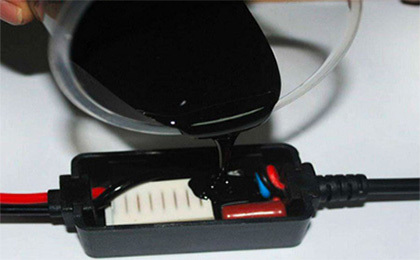



Silicone potting are indispensable functional adhesives in industrial production. With their excellent stability, adhesion, insulation, and high-temperature resistance, they are widely applicable to various industry production scenarios and have become a core supporting material in electronics, new energy, and high-end manufacturing. With the iterative upgrading of material technology, the comprehensive performance of Silicone potting continues to be optimized, and their applicable scenarios are constantly expanding. They can provide multiple guarantees such as protection, sealing, bonding, and insulation for precision components and industrial equipment, and have extremely high market acceptance.
I. Core Performance Advantages of Silicone Potting
Silicone potting combine ease of application with stability, exhibiting extremely strong comprehensive adaptability. Before application, the colloid is a flowing liquid with excellent permeability, capable of fully filling tiny gaps and voids in components, adaptable to various precision and complex component structures. After curing, the colloid has moderate hardness, high bonding strength, and a stable overall structure. It also possesses excellent high-temperature resistance, insulation, pressure resistance, waterproofing, and moisture resistance, and can work stably for a long time in normal operating conditions at 120℃ and below, without easily experiencing aging, peeling, or failure, providing comprehensive protection for industrial components and equipment.
II. Main Application Areas of Silicone Potting
Leveraging their multiple superior properties, silicone potting are widely used in several core fields, including high-end manufacturing, industrial production, and consumer equipment. They can specifically address needs such as equipment sealing, insulation protection, shock absorption, and waterproofing/moisture resistance. Reliable brands of Silicone Potting offer standardized and customized application solutions. A representative brand is TENSAN, which specializes in potting compound R&D and production, and can customize products to suit different industry conditions and equipment characteristics. Core application areas include:
III. Key Precautions for Using Silicone Potting
The effectiveness of silicone potting depends not only on the quality of the product itself but also on proper application procedures. Strict safety precautions must be taken during application. Specific precautions are as follows:
1. Safety Precautions The raw materials for Silicone Potting have a certain degree of irritation. During application, personal protective equipment such as gloves and masks must be worn at all times to avoid direct contact between the compound and skin or eyes. If the adhesive accidentally gets on the skin, immediately wipe it clean with alcohol or acetone, then rinse thoroughly with water. If it splashes into the eyes or causes skin redness, swelling, allergic reactions, or other discomfort, seek medical attention immediately to avoid skin or eye damage. The work site must be well-ventilated and kept away from open flames and high-temperature heat sources to avoid safety hazards.
2. Construction Operation Specifications Most Silicone Potting are two-component products. During construction, the A and B components must be mixed strictly according to the product instructions. Deviations in the mixing ratio will directly lead to incomplete curing, reduced bond strength, and insulation failure, significantly reducing the product's protective effect. The mixed adhesive must be thoroughly stirred and the potting process completed within the specified workable time to prevent premature curing and maintain construction quality. Before construction, the surface of the device must be cleaned of dust, oil, and water stains to ensure a clean and dry potting interface, improving adhesion and sealing performance.
IV. Conclusion
Silicone potting, with their stable physical and chemical properties, cover many core fields such as new energy, military, aerospace, automotive, electronics, and medical, making them key materials for industrial protection and device sealing and reinforcement. In practical applications, it is recommended to select appropriate products from reputable brands based on the usage scenario and operating environment, while strictly adhering to construction specifications and safety guidelines. This will fully leverage the insulation, waterproofing, reinforcement, and high-temperature resistance advantages of silicone potting, while also ensuring construction safety and long-term stable equipment operation.