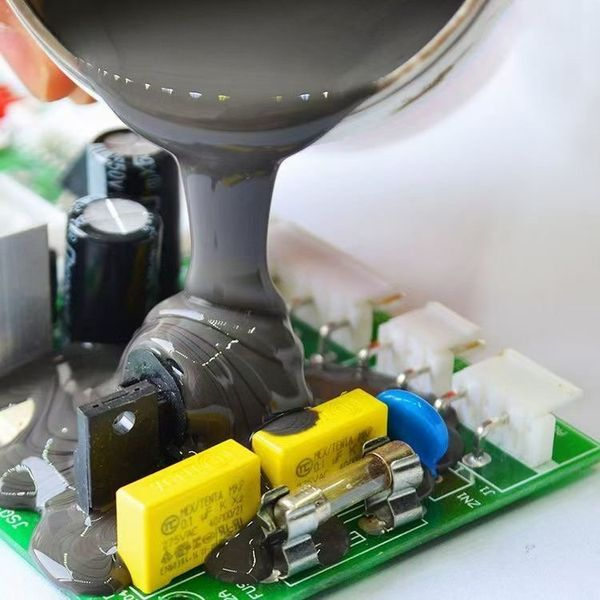



In many high-end fields such as electronics, new energy, military, and aerospace, various precision components often operate under complex conditions including high temperature, humidity, and corrosion. Ordinary potting compounds are prone to softening, deformation, delamination, and failure. High-temperature resistant potting compounds, however, are special adhesives developed specifically for high-temperature environments. With excellent heat resistance and comprehensive protective performance, they can comprehensively protect precision electronic components, preventing equipment failures caused by high temperature, moisture, and corrosion, effectively extending equipment lifespan. They are the core material for component encapsulation and protection under high-temperature conditions.
I. Core Characteristics
Compared to ordinary potting compounds, high-temperature resistant potting compounds offer superior overall performance, are suitable for harsh industrial environments, and possess comprehensive and practical core characteristics.
II. High Temperature Resistance
This potting compound boasts a significantly superior heat resistance compared to ordinary products. While conventional potting compounds can only withstand temperatures around 80℃, this product, after curing, can operate stably in continuous high-temperature environments of 120℃-150℃ without any degradation in its structure or protective properties. It can also withstand short-term high-temperature shocks without easily experiencing damage, delamination, or failure, fully meeting the long-term operational protection requirements of high-power electronic components and industrial high-temperature equipment, and is suitable for most industrial high-temperature conditions.
III. Usage and Safety Precautions
This high-temperature potting compound is easy to use, requiring no complex equipment; it can be applied manually or by machine. During application, the main adhesive and hardener must be mixed according to the standard ratio, thoroughly stirring until there are no lumps or separations to avoid imbalances that could affect the curing effect. Pouring should follow the "multiple small applications" principle, strictly controlling the thickness of each pour to prevent incomplete curing and cracking due to excessive thickness. It cures naturally at room temperature; heating to around 70℃ can significantly shorten the curing period and improve application efficiency. If the initial pour is unsatisfactory, multiple pours can be made after initial curing. The new and old adhesives blend well, without affecting the overall protection and bonding strength, and the process has a high tolerance for error.
Regarding safety, the uncured liquid adhesive has chemical properties and is strictly prohibited from being ingested. It is recommended to wear protective gloves and a mask during application to avoid direct contact with skin and respiratory tract. If contact occurs accidentally, rinse immediately with clean water to ensure construction safety.