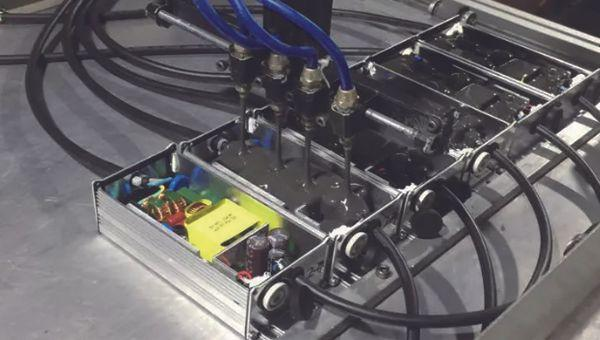
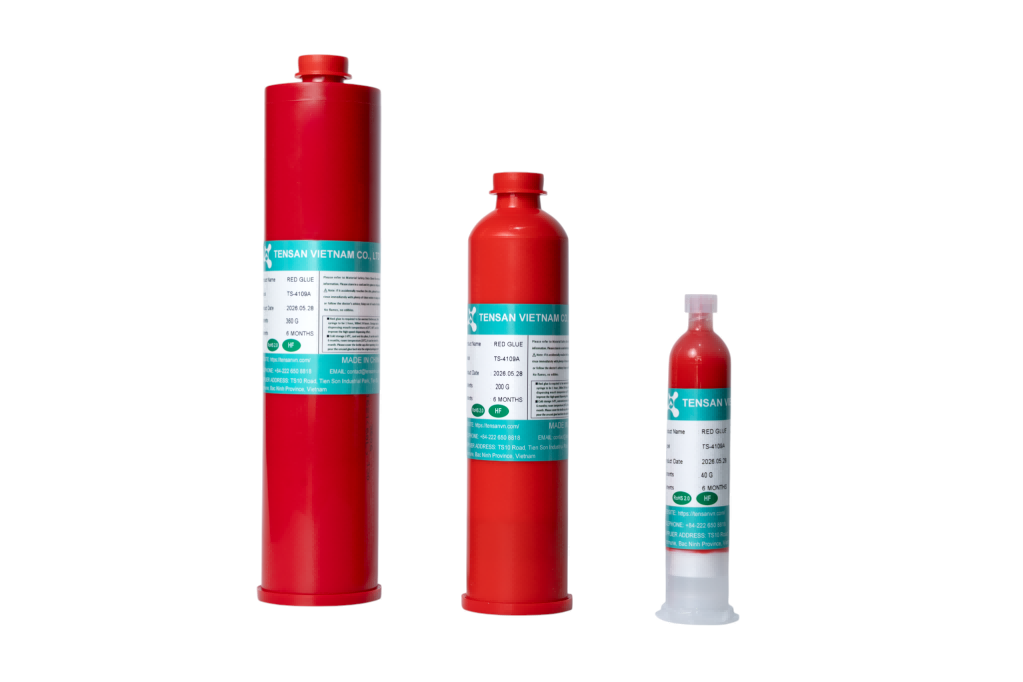
For high-power components, using electronic potting compounds is not optional, but a crucial prerequisite for ensuring their stable operation. Air has a thermal conductivity of only 0.024 W/(m·K), resulting in extremely poor heat dissipation. If high-power components rely solely on natural air cooling, heat cannot be effectively conducted away, easily leading to localized high temperatures. This high-temperature environment directly damages components and related parts, significantly reducing the reliability of the entire electronic system and shortening its normal operating life. Therefore, the appropriate selection of electronic potting compounds is essential for the stable operation of high-power components.
Electronic potting compounds suitable for high-power components must possess the following core properties to effectively perform their protective and heat dissipation functions:
-
1. Low viscosity and excellent leveling properties, enabling smooth filling of gaps in complex electronic components, adapting to various precision molding processes, and ensuring seamless potting;
-
2. After curing, it has a soft, rubbery texture with excellent impact resistance, effectively buffering damage to components from external vibrations and improving equipment stability;
-
3. Outstanding heat, moisture, and cold resistance, adapting to temperature and humidity changes in different working environments, significantly extending the lifespan of electronic components;
-
4. Using an addition-type formulation, it can achieve room temperature or heated curing, flexibly adapting to different production process requirements and improving production efficiency;
-
5. Excellent moisture and water resistance, isolating external moisture, dust, and other impurities, preventing short circuits, corrosion, and other malfunctions in components.
Electronic potting compounds have a wide range of applications, especially in the field of high-power components. Typical applications include:
-
1. Various heat dissipation devices requiring effective cooling, achieving efficient thermal connection between heat-generating components and heat dissipation structures, improving overall heat dissipation efficiency;
-
2. High-voltage corona elimination scenarios, their non-flammable properties can be used for potting high-voltage flyback transformers in televisions and similar equipment, ensuring high-voltage operation safety;
-
3. Filling gaps between heat-generating elements and heat dissipation facilities in various electronic and electrical equipment, further improving heat dissipation by filling with thermally conductive media;
-
4. Power amplifier tubes and CPUs in the electronics industry. 5. Filling the contact surface between power amplifier tubes and heat sinks, such as in televisions and DVDs, acting as a heat transfer medium to rapidly conduct heat;
-
5. Surface coating and overall potting of microwave communication, microwave transmission equipment, and microwave devices such as dedicated power supplies and regulated power supplies, achieving both protection and heat dissipation;
-
6. Heat transfer scenarios for various electronic components, such as transistors, ballasts, thermal sensors, and computer fans, especially suitable for filling gaps between high-power transistors (molded tubes) and diodes and substrates such as aluminum and copper plates. It can also be used as a thermally conductive insulating material for rectifiers and electrical equipment.
With the continuous maturation and optimization of potting technology, the performance of thermally conductive silicone electronic potting compounds continues to improve. In the field of electronic equipment protection, especially in the protection of high-voltage, high-power components and assemblies, it plays an increasingly important role, becoming one of the core materials for ensuring the stable and long-term operation of high-power electronic equipment.