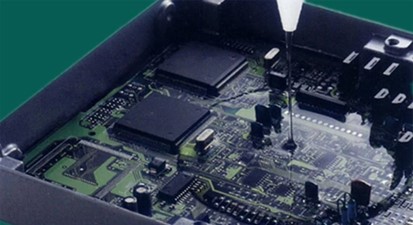



In the application process of silicone potting compounds, degassing is a crucial step in ensuring product quality. Its core purpose is to ensure that the cured compound is free of air bubbles and pores, both internally and on the surface, thus avoiding impacts on the subsequent performance of the product. Many users believe that degassing simply requires opening a vacuum chamber for extraction; however, improper operation of this step can lead to a series of problems. This article will detail the consequences of degassing abnormalities, the key factors affecting degassing effectiveness, and preventative measures.
Silicone potting compounds are widely used in various fields such as electrical engineering, military electronics, aerospace, communication equipment, and automotive electronics. Different fields have specific requirements for the electrical properties, shock and pressure resistance, shrinkage and expansion properties, water resistance, and sulfur and acid/alkali resistance of the compound. If vacuum degassing is inadequate before curing, residual air bubbles (especially internal bubbles) inside or on the surface of the compound will reduce the original effectiveness of the potting compound, leading to abnormalities in the end product—minor cases require rework, wasting manpower, resources, and money; severe cases can directly result in product scrap. Therefore, identifying the influencing factors of degassing, formulating preventive measures, and mitigating process risks are crucial. Specific influencing factors and related precautions are as follows:
I. Vacuum Degree: The Core Guarantee of Degassing Effectiveness
The vacuum degree is determined by both the vacuum pump power and the overall airtightness of the equipment. Problems with either will directly affect the degassing effect. On the one hand, after long-term use, vacuum pump parts will age and wear, leading to a decrease in working power and weakened pumping force. On the other hand, damage or leaks in the air pipes and joints of the vacuum degassing chamber will also result in insufficient pumping force.
Therefore, equipment inspection, maintenance, and repair should be routinely performed regularly. Special attention should be paid to checking the vacuum pump's operating status, the airtightness of the air pipes and joints, and verifying the sensitivity of the vacuum gauge—if the vacuum gauge is non-standard or has low sensitivity, even if the display is normal, the vacuum degree may not meet the standard, creating potential process risks.
II. Degassing Process: A Key Link to Avoid Abnormalities
Two major problems are most likely to occur during the degassing process: glue overflow and difficulty in breaking and eliminating air bubbles. Overflowing adhesive often occurs in products with insufficient or excessive amounts of adhesive. For such products, if using a manual control box, continuous vacuuming at -0.1 MPa is not recommended. The adhesive state must be observed throughout the process: when the adhesive is about to overflow, appropriately reduce the vacuum level and repeat the operation; alternatively, a segmented vacuuming method can be used. First, adjust the vacuum level to -0.08~-0.09 MPa to slowly remove air bubbles from the adhesive surface and upper layer. When air bubbles become difficult to remove, adjust the vacuum level to -0.1 MPa and continue vacuuming. This can effectively prevent overflowing adhesive.
III. The Adhesive Itself: The Foundation of Defoaming Performance
Besides equipment and processes, the properties of the adhesive itself also affect the defoaming effect, especially for manufacturers. In the research and optimization of silicone potting compounds, the density and viscosity of the adhesive, as well as the performance and dosage of the defoamer, directly affect its defoaming properties. Mature silicone potting compound products typically have self-defoaming capabilities, making thorough defoaming easier.
In summary, for most users, focusing on routine equipment maintenance and optimizing the degassing process can effectively prevent product abnormalities caused by air bubbles and ensure the application effect of potting compounds.