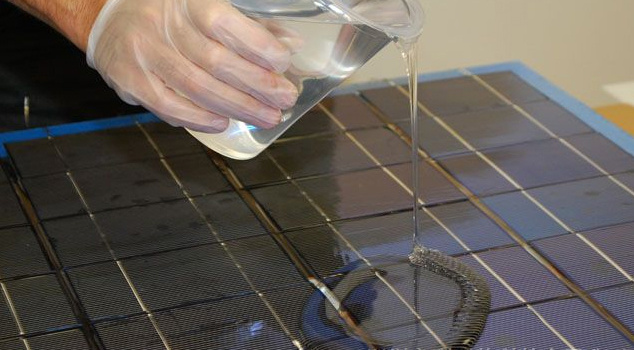



The flowability of silicone potting compounds can be characterized in various ways: prior to use, the viscosity of the compound can be tested at a specific temperature, or its flow characteristics can be assessed by simulating its penetration rate; during the application process, flowability can be gauged by observing the phenomenon of thickening during curing (specifically, the "working time"). In the following sections, we will provide a detailed analysis—based on these core dimensions—of the key factors that influence the flowability of silicone potting compounds.
I. Viscosity
Viscosity is a core metric that provides an intuitive indication of the relative fluidity or thickness of a silicone potting compound. In practical applications, if the compound is required to possess excellent penetration capabilities and rapid self-leveling properties, users typically prioritize low-viscosity products; this is because lower viscosity translates to superior flowability, resulting in more effective penetration and leveling. Conversely, to prevent issues such as overflow or dripping during application, users should select products with slightly higher viscosity, as these offer superior containment and flow-control properties. Therefore, viscosity stands as one of the critical factors determining the quality of a silicone potting compound's flowability.
II. Working Time
During the curing process, silicone potting compounds undergo several critical reaction phases, among which the "working time" (or pot life) has a particularly significant impact on flowability. For compounds with a short working time, application must be carried out as quickly as possible after mixing. As time elapses, the mixed compound gradually thickens and its flowability deteriorates; failure to apply the compound in a timely manner may result in defects such as uneven cured surfaces, incomplete filling, or voids within the potted assembly. Consequently, working time is another crucial factor influencing the flowability of silicone potting compounds.
III. Thixotropy
Thixotropy in silicone potting compounds refers to the phenomenon wherein the compound becomes less viscous (thinner) when subjected to external mechanical agitation (stirring), yet reverts to its original viscosity once the agitation ceases. Typically, high-quality silicone potting compounds exhibit negligible thixotropy and therefore do not adversely affect flowability. However, if users observe during application that the mixed compound exhibits diminished flowability—attributable to an abnormally high degree of thixotropy—it can be concluded that thixotropy is the primary cause of the issue.