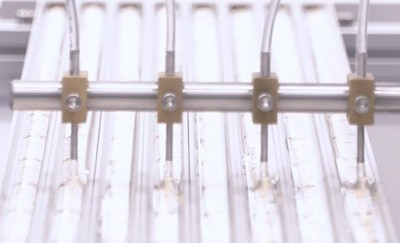

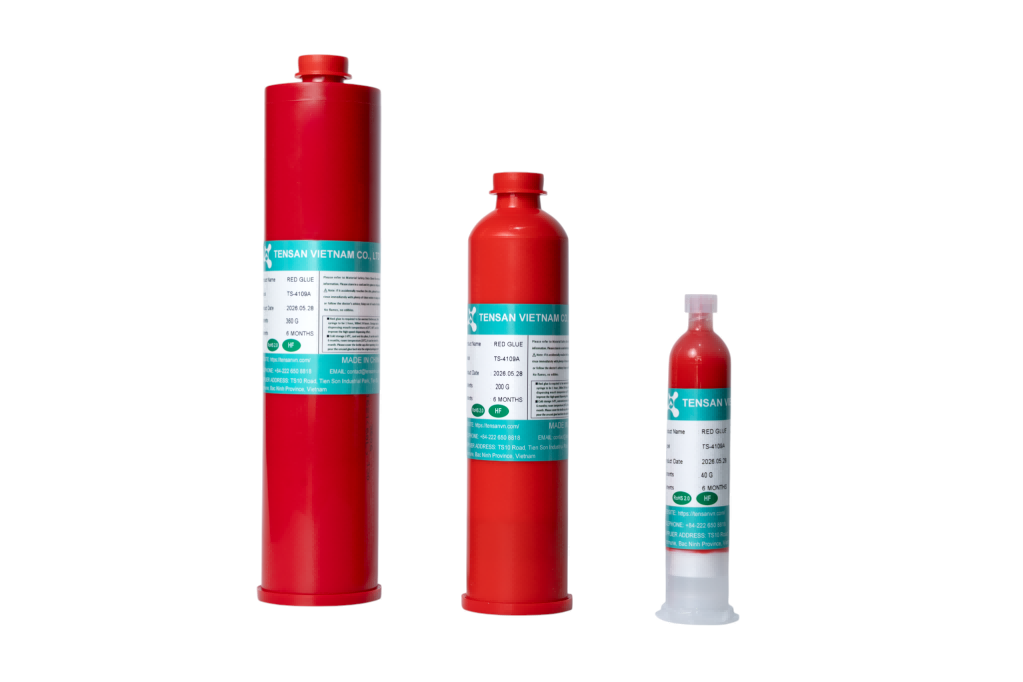


Many customers confuse potting compounds and sealants, often mistakenly believing they are the same product. In fact, they are different products. While the core differences may not be immediately obvious, they differ significantly in application and performance. Below is a detailed breakdown.
I. Core Differences: 3 Key Dimensions
1. Different Flowability (Most Obvious Difference)
Potting compounds are low-viscosity liquids before curing, with good flowability, easily penetrating even small gaps for perfect filling and sealing. Sealants, on the other hand, have poor flowability, do not easily flow, and can be flexibly applied to the shape of the sealing surface to meet different sealing needs.
2. Different Sealing Objects (Application Differences)
The core purpose of potting compounds is to seal and protect precision electronic components, such as circuit boards and electronic modules, focusing on comprehensive protection of electronic components. Sealants have a wider range of applications, mostly used in daily life and general industrial scenarios, mainly providing adhesion and basic sealing, without needing to be adapted to precision components.
3. Different Performance After Curing (Functional Differences)
Sealants, after curing, primarily provide basic protection, achieving waterproofing, leak prevention, heat insulation, sound insulation, and vibration damping. Potting compounds offer more comprehensive performance; after curing, in addition to basic moisture and dust protection, they also provide high and low temperature resistance, corrosion resistance, thermal conductivity, and insulation, making them suitable for scenarios with higher protection requirements.
II. Can Potting Compounds and Sealants Be Mixed?
If the performance requirements for the adhesives are low, potting compounds and sealants can be used temporarily as substitutes, as their basic properties overlap and can meet simple protection needs. However, if there are specific and higher requirements for protective performance (such as insulation, thermal conductivity, and high and low temperature resistance), targeted selection is necessary; mixing them will affect the protective effect.
III. Purchase Recommendations
Before purchasing, clearly define your core needs and determine the specific performance requirements of the adhesive (e.g., whether thermal conductivity, insulation, and high/low temperature resistance are necessary). Then, consider the intended use scenario to determine whether to choose a potting compound or a sealant. Furthermore, both types of adhesives are available in epoxy resin, silicone, and polyurethane types. Different types are suitable for different working environments; therefore, precise selection based on the actual scenario is crucial to achieving the desired protective effect.