

Industry dynamic

LED Heat Dissipation: Comparison of Thermal Pad and Thermal Grease

2026-04-16 - Leave me a message

In LED heat dissipation, there is no absolute superiority of thermal pads or thermal grease; the choice depends on the application scenario. The two differ significantly in terms of usability, insulation, and lifespan. A detailed comparison is as follows:
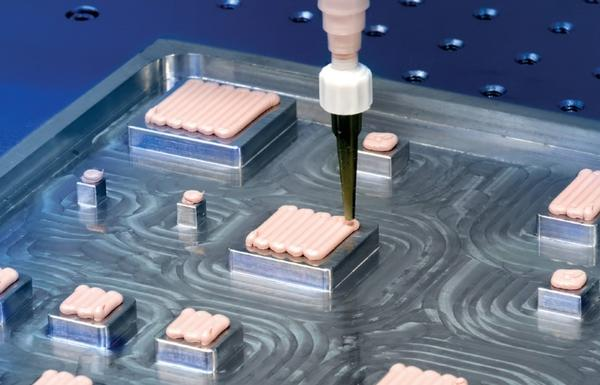


  1. In terms of ease of use, the difference is obvious. Thermal grease is generally preferred for LED lights, while thermal pads are more suitable for LED matrix displays. Silicone sheets can be cut to any size, have slight adhesiveness on both sides, and can be easily applied after removing the protective film. This results in small tolerances, a clean application, and reduced labor costs. Thermal grease, on the other hand, requires even application, which is inconvenient for large areas, prone to uneven application, and may contaminate surrounding components, potentially causing short circuits. It also incurs higher labor costs.
  2. Regarding insulation performance, silicone sheets have a significant advantage. A 1mm thick silicone sheet can achieve an electrical insulation index of over 4000 volts. Thermal grease, due to the addition of metal powder, has poorer insulation properties. In terms of lifespan, silicone sheets are solid, silicone oil is less volatile, has good aging resistance, and a lifespan of over ten years; silicone grease is paste-like, which will release free substances under prolonged high temperatures, contaminating the lamp lens and affecting light transmittance, and has poor aging resistance, with a lifespan typically not exceeding one year.
  3. Regarding form and thickness, silicone grease is paste-like, limiting its ability to fill gaps; silicone sheets are sheets with a thickness range of 0.5-10mm, allowing for a wider range of applications. In terms of shock resistance, silicone sheets containing fiberglass cloth have strong shock and tear resistance, can be die-cut and punched, and are soft and compressible, making them suitable for through-hole LEDs with pins, providing shock resistance during transportation, a requirement that silicone grease cannot meet.
  4. In terms of reworkability, silicone sheets have a slight adhesiveness, are reusable, and are easy to disassemble and repair; silicone grease is highly adhesive, making disassembly and assembly inconvenient. In terms of thermal conductivity, both thermal grease and silicone pads have a thermal conductivity of 1.0~5.0 W/mK (silicone pads can reach up to 7.9 W/mK). For the same thermal conductivity, silicone grease offers better short-term thermal conductivity due to its lower thermal resistance; however, silicone grease is prone to evaporation and drying, while silicone pads provide more stable thermal conductivity in the long run.
  5. Regarding cost-effectiveness, silicone grease offers better thermal conductivity the thinner it is applied, and it is also cheaper, making it more cost-effective. Silicone pads, on the other hand, have a slightly higher cost. In summary, silicone grease is the preferred choice for short-term, low-cost, small-area LED heat dissipation, while silicone pads are the preferred choice for long-term stability, insulation requirements, or complex scenarios.

Send Inquiry


X
We use cookies to offer you a better browsing experience, analyze site traffic and personalize content. By using this site, you agree to our use of cookies. Privacy Policy
Reject Accept