

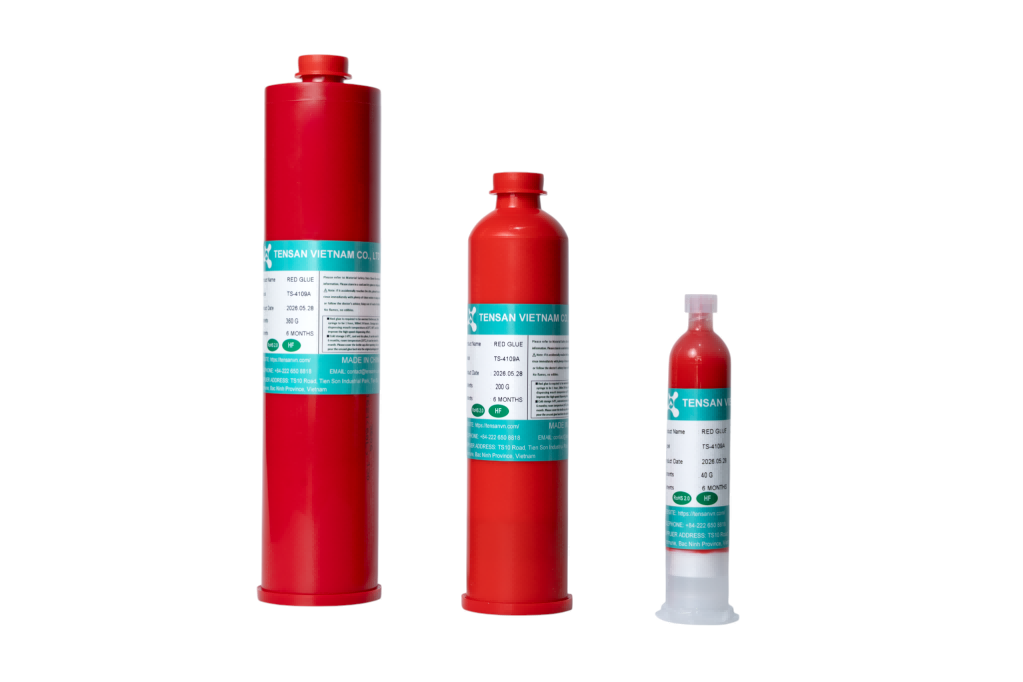


As power densities in new energy vehicle traction inverters, onboard chargers, and energy storage systems continue to climb, the performance benchmarks for silicone and polyurethane potting compounds are being rewritten at an unprecedented pace. Industry experts now widely recognize that the sector has entered a dual-competition era—thermal conductivity and lightweighting—as manufacturers race to balance heat dissipation efficiency with system weight reduction.
Thermal Conductivity Breaks New Ground
The most visible manifestation of this trend is the escalating thermal conductivity race. On July 21, 2026, Henkel Adhesive Technologies launched Bergquist Gap Filler TGF 6500LVO, a next-generation two-component thermal gap filler based on low-volatile silicone technology achieving an industry-leading 6.5 W/m·K thermal conductivity. Designed for advanced automotive applications including ADAS, ECUs, and power conversion components in electric vehicles, the material combines high thermal conductivity with low bond line thickness, enabling greater design flexibility for space-constrained applications. The material delivers reliable performance at operating temperatures up to 150°C and has been tested and certified to NASA standards (MIL-STD-883 Method 5011), indicating its reliable performance in demanding application scenarios.
This launch follows a series of high-performance material introductions in 2026. At the Battery Show in Stuttgart in June, WACKER showcased its ELASTOSIL® RT 7616 TC and RT 7624 TC potting compounds, offering thermal conductivities of 1.6 W/mK and 2.4 W/mK respectively. These addition-curing silicone elastomers cure at room temperature, enabling energy-saving processing of large and heavy components. What sets these products apart is their optimized rheology, which minimizes filler sedimentation—a longstanding industry pain point. Even if fillers settle after unfavorable transport and storage conditions, they can be easily redispersed using standard mixing equipment.
German specialty chemical company WEVO-CHEMIE also unveiled its WEVOSIL 2210x FL range of two-component silicone potting compounds, purpose-built for next-generation EV power electronics. The portfolio offers graded thermal performance: WEVOSIL 22102 FL delivers 1.0 W/m·K for applications prioritizing weight reduction, while WEVOSIL 22105 FL combines very low viscosity with 1.5 W/m·K thermal conductivity and is designed for continuous operating temperatures up to 200°C. The supersoft hardness of around 60 Shore 00 reduces stress on solder joints, substrates, and sensitive semiconductors—critical to the durability of modern electric axles.
Lightweighting: The New Competitive Battleground
Beyond thermal performance, lightweighting has emerged as the industry's next frontier. As CTP (cell-to-pack) and CTC (cell-to-chassis) integration technologies become mainstream, battery pack adhesive consumption has surged from 1.2 kg per vehicle in 2020 to 2.8 kg in 2025. Thermally conductive structural adhesives simultaneously承担 thermal conduction and structural bonding functions, eliminating bolts and fasteners to achieve 5-8% weight reduction per battery pack.
Material innovation is driving this lightweighting trend. In June 2026, Chinese precision temperature control equipment provider Envicool filed a patent for a low-density thermally conductive potting compound. The invention employs low-cost, low-density, high-thermal-conductivity spherical graphite as the thermally conductive filler, with different particle sizes compounded to完善 internal thermal pathways and reduce internal thermal resistance. The graphite fillers are coated with insulating layers to significantly enhance insulation performance, and the resulting potting compound meets the requirements for new energy vehicle applications.
Similarly, Guangdong Siquan New Materials received a patent in July 2026 for a thermally conductive potting compound featuring ultra-high thermal conductivity, low volatility, low viscosity, excellent mechanical properties, and superior electrical insulation. Notably, the material demonstrates outstanding storage stability, with no agglomeration or caking after six months of storage. The company increased its R&D investment by 55.85% year-over-year in 2025, reflecting the industry's intensifying commitment to material innovation.
Market Dynamics and the Road Ahead
The performance race is underpinned by robust market growth. The global thermally conductive silicone potting compound market was valued at USD 465.7 million in 2025 and is projected to reach USD 784.3 million by 2034, at a compound annual growth rate of 5.9%. More significantly, the vehicle-grade thermally conductive potting compound demand is growing at a compound annual growth rate of 28.5% (2024-2026), driven by the acceleration of 800V platforms that impose stricter requirements on insulation and thermal conductivity.
Industry experts point out that the era of single-performance optimization is over. The future belongs to multifunctional materials that simultaneously deliver high thermal conductivity, low density, flame retardancy, low stress, and fast curing. As one industry observer put it, "In 2026, the recommended choice is multifunctional potting compounds: thermal conductivity ≥3 W/m·K, density <2 g/cm³, combining flame retardancy and low volatile characteristics".
The competitive landscape is also shifting. Electronic adhesive localization rates in China have climbed from 31% in 2024 to 44% in 2026, with Chinese companies steadily enhancing their competitiveness in the mid-to-high-end market. Domestic manufacturers including回天新材, Jitai, Debang Technology, and Gaomeng New Materials are making breakthroughs in thermally conductive structural adhesives. In some sub-segments such as thermally conductive gels, the localization rate has already exceeded 70%.
For electronics manufacturers, the message is clear: selecting a potting material with adequate thermal conductivity is no longer sufficient. The entire thermal management ecosystem—thermal performance, weight efficiency, processing characteristics, and long-term reliability—must be considered holistically. As power densities continue to rise and lightweighting requirements intensify, the potting compound industry is entering an era where every watt and every gram counts.