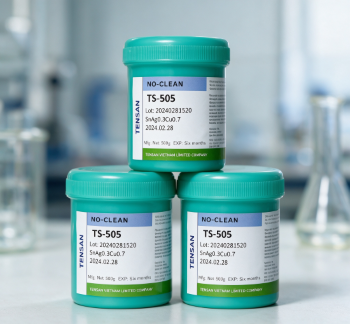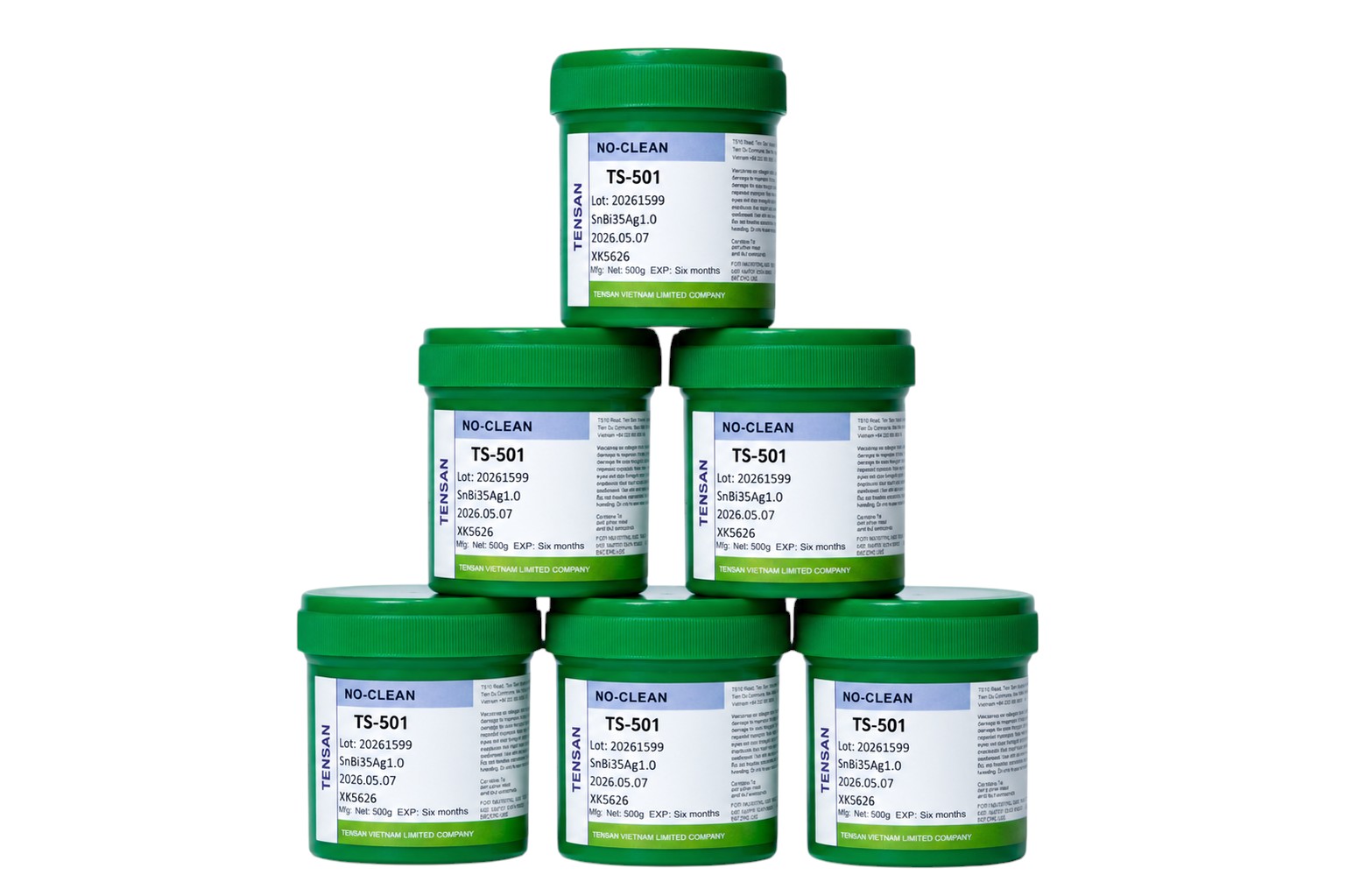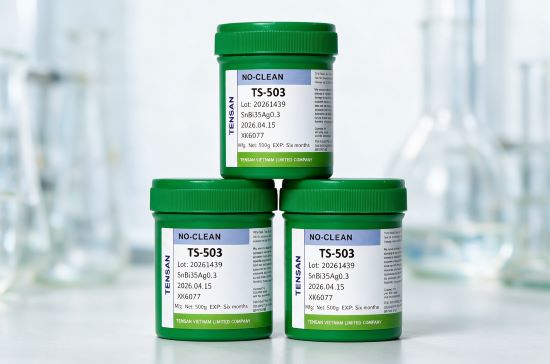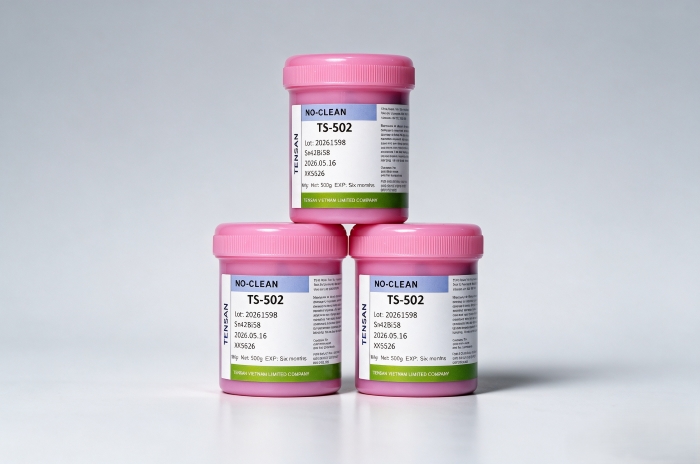





When SMT process engineers evaluate a new supplier or manufacturer for soldering materials, voiding control consistently ranks among the top three reliability concerns – especially for QFN, LGA, and large thermal pad components. TENSAN, a Vietnam-based manufacturer with extensive experience in solder paste formulation, has developed a Low Voiding Lead-Free Solder Paste that directly addresses this challenge. The TS505 series combines a carefully balanced SAC0307 alloy with a halogen-controlled flux system designed to minimise gas entrapment, delivering consistent voiding performance that meets the stringent requirements of automotive, telecom, and industrial electronics. This article explores what makes a solder paste with low voiding performance effective, presents the key specifications of TENSAN TS505, and provides practical guidance for engineers and procurement professionals seeking a reliable soldering solution.
When SMT process engineers evaluate a new supplier or manufacturer for soldering materials, voiding control consistently ranks among the top three reliability concerns – especially for QFN, LGA, and large thermal pad components. TENSAN, a Vietnam-based manufacturer with extensive experience in solder paste formulation, has developed a Low Voiding Lead-Free Solder Paste that directly addresses this challenge. The TS505 series combines a carefully balanced SAC0307 alloy with a halogen-controlled flux system designed to minimise gas entrapment, delivering consistent voiding performance that meets the stringent requirements of automotive, telecom, and industrial electronics.
This article explores what makes a solder paste with low voiding performance effective, presents the key specifications of TENSAN TS505, and provides practical guidance for engineers and procurement professionals seeking a reliable soldering solution.
Understanding Voiding – Why It Matters for SMT Reliability
Voiding occurs when gas bubbles become trapped inside a solder joint during reflow. These voids – visible as dark spots on X-ray inspection – can significantly degrade thermal conductivity, mechanical strength, and long-term reliability. For critical components like QFN packages, BGAs, and power MOSFETs, excessive voiding can lead to overheating, premature failure, and field returns.
What Causes Voiding in Solder Joints?
A solder paste with low voiding performance must address all these factors through careful formulation and process guidance.
What Does Low Voiding Performance Mean?
For most industry standards, acceptable voiding levels are defined as:
A solder paste with low voiding performance should consistently achieve void rates below 20% under normal production conditions, with statistical evidence of repeatability.
TENSAN TS505 – A Solder Paste with Low Voiding Performance
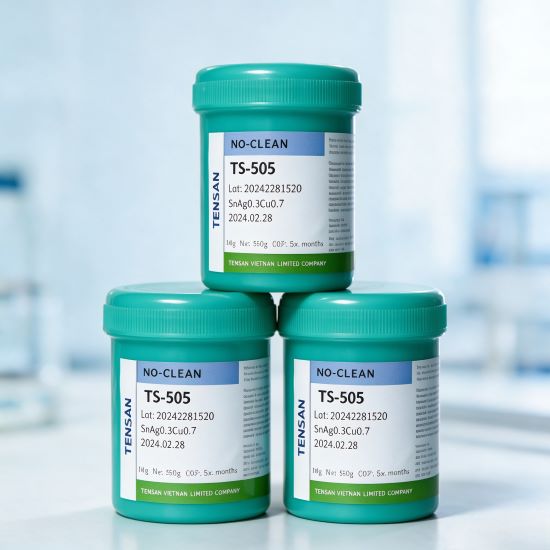
TS505 is a high-temperature, no-clean, lead-free solder paste with low voiding performance, formulated with the Sn99Ag0.3Cu0.7 (SAC0307) alloy. The product is specifically engineered to provide:
Solder Paste Specification
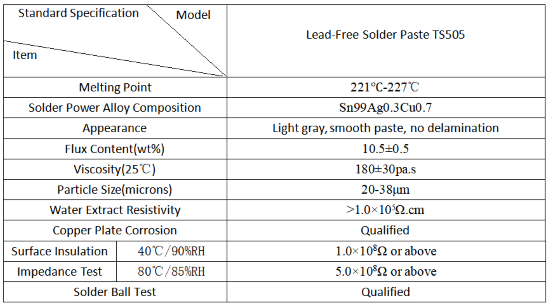
Solder Paste Specification
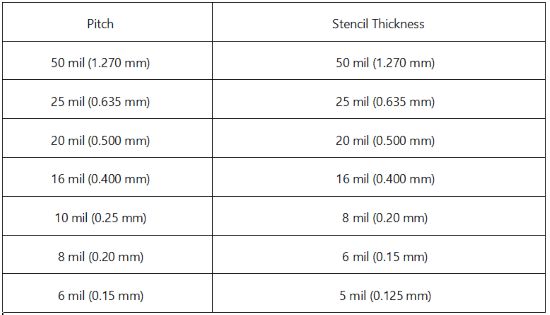
Flux System – The Key to Low Voiding
The flux chemistry is the most critical element of any solder paste with low voiding performance. TS505 uses a halogen-controlled flux that:
Typical Applications
TS505 is specified as a solder paste with low voiding performance in numerous high-reliability sectors:
In each of these applications, the combination of TS505's low voiding characteristics and stable printing performance contributes to higher first-pass yields and lower field failure rates.
Frequently Asked Questions About Solder Paste with Low Voiding Performance
Q1: What voiding percentage can I achieve with TS505 on a QFN pad?
A1: Under the recommended profile, TS505 typically achieves void fractions of 10–18% on 4×4 mm QFN packages with ENIG finish. For larger pads (6–8 mm²), typical voiding ranges from 15–22%. These figures are based on X-ray inspection with 3D reconstruction; the actual voiding depends on pad layout, solder mask definition, and profile optimisation. We recommend running a test coupon with your specific board finish to validate performance. In side-by-side comparisons, TS505 consistently outperforms standard SAC305 pastes by 8–12 percentage points in void reduction.
Q2: Why does TS505 require a longer soak time compared to standard solder pastes?
A2: The flux chemistry in TS505 uses activators and solvents with higher boiling points, specifically chosen to release volatiles in a controlled manner. A shorter soak (60 seconds or less) may not allow these compounds to fully escape before the alloy melts, leading to entrapment and higher voiding. The recommended 90–120 second soak ensures a gradual, controlled outgassing process that minimises gas bubble formation. This is a deliberate design choice – slightly longer cycle time yields significantly better joint reliability, especially for thermal pads.
Q3: How can I verify that TS505 is delivering low voiding performance on my production line?
A3: We recommend the following validation protocol: 1) Print a test board with representative components and thermal pads. 2) Reflow using your standard production profile. 3) Perform X-ray inspection and measure void percentages across at least 10–15 joints. 4) Repeat with a 10-second increase in soak time and compare results. 5) Document the profile and voiding data for process control. TENSAN provides a Certificate of Analysis with every batch, covering alloy composition, flux content, and viscosity, ensuring consistent material properties. Our technical team also offers support for profile optimisation if needed.
Conclusion
Voiding is not an inevitable defect – it can be controlled through the right combination of paste formulation, process design, and handling discipline. TENSAN TS505 is a solder paste with low voiding performance that has been developed specifically to address this challenge. With its SAC0307 alloy, L1 halogen-controlled flux, and broad reflow window, it provides a practical, proven solution for high-reliability SMT applications.
By choosing TENSAN as your supplier, you gain access to consistent material quality, documented performance data, and responsive technical support – all essential elements for achieving repeatable low-voiding results on your production line.
Contact TENSAN Vietnam for samples, CoA documentation, or technical consultation.
TENSAN VIETNAM CO., LTD
TS10 Road, Tien Son Industrial Park, Bac Ninh Province, Vietnam
Tel: +84-222-650-8818
Email: mark@sztensan.com