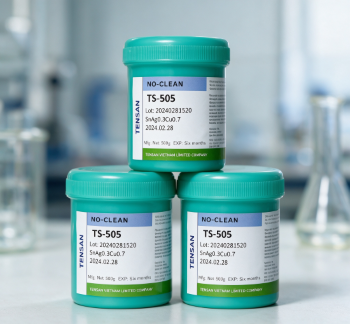



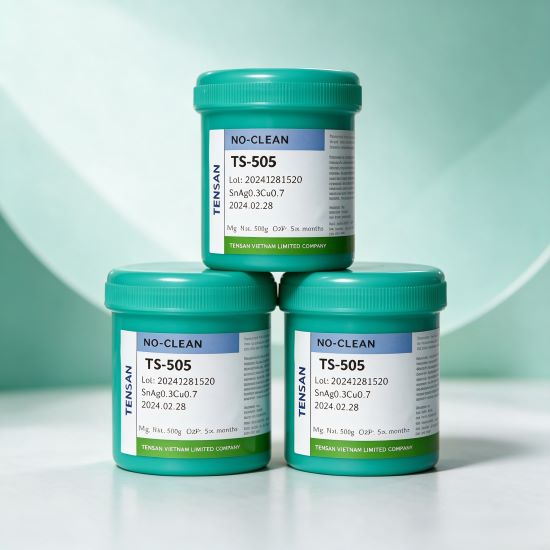
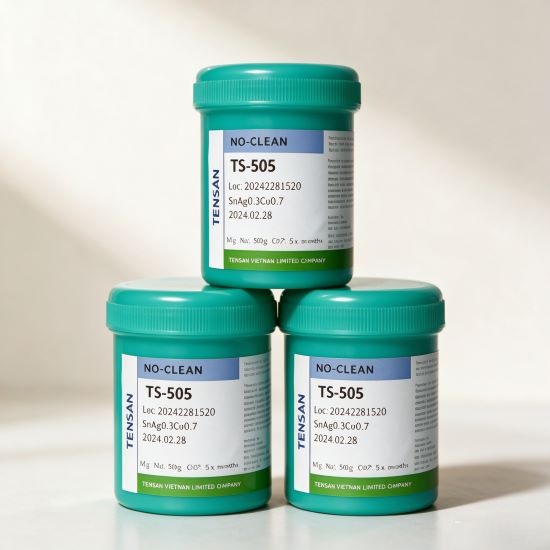
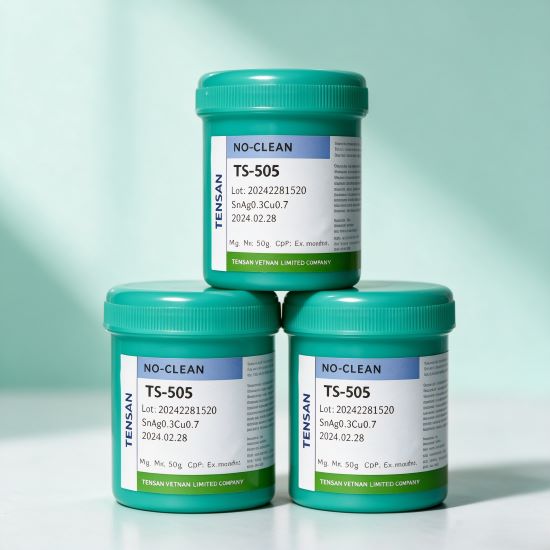
TENSAN TS505 is formulated with these principles at its core. The solder paste with low voiding performance uses a halogen-controlled flux (L1 level, 0.085% halogens) and a carefully matched solvent system to release volatiles gradually, avoiding violent boiling that would otherwise trap gas underneath large thermal pads.
When searching for a supplier or manufacturer of advanced soldering materials, SMT process engineers consistently rank voiding control as one of their top three reliability concerns. TENSAN, a trusted manufacturer with over a decade of solder paste formulation experience, addresses this challenge directly with its Low Voiding Lead-Free Solder Paste – an alloy-and-flux system engineered to minimise gas entrapment in critical joints, especially on QFN, LGA, and large thermal pad components.
This article explains what makes a solder paste with low voiding performance effective, presents the detailed specifications of TENSAN TS505, and answers the most common questions procurement and engineering teams ask before qualifying a new supplier.
What Defines a Solder Paste with Low Voiding Performance?
Voiding occurs when volatile compounds from the flux or contaminants fail to escape before the solder solidifies, leaving gas bubbles trapped inside the joint. A solder paste with low voiding performance must achieve three things simultaneously:Rapid oxide removal without excessive gas generation,A controlled outgassing window during preheat and soak,Sufficient wetting force to push bubbles out before freezing.TENSAN TS505 is formulated with these principles at its core. The solder paste with low voiding performance uses a halogen-controlled flux (L1 level, 0.085% halogens) and a carefully matched solvent system to release volatiles gradually, avoiding violent boiling that would otherwise trap gas underneath large thermal pads.
TS505 Product Specifications – The Numbers Behind Low Voiding
Alloy Composition (Sn99Ag0.3Cu0.7 – SAC0307)
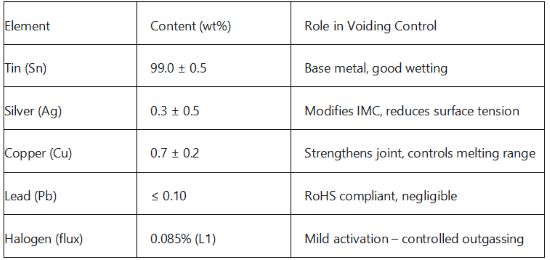
The SAC0307 melting range is 221–227°C, offering a wide plastic region that allows bubbles to escape before full solidification – a key attribute of any solder paste with low voiding performance.
Solder Paste Physical Properties
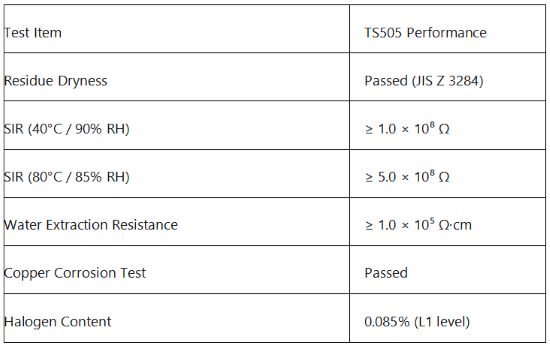
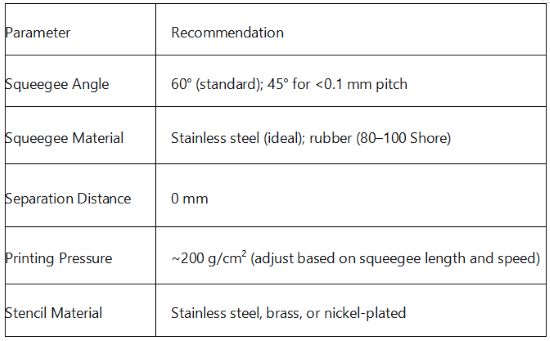
Printing Parameters
Typical Applications for TENSAN Low Voiding Lead-Free Solder Paste
TS505 is specified by engineers as a solder paste with low voiding performance for the following high‑reliability sectors:
For each of these, a solder paste with low voiding performance directly translates to lower field failure rates and longer product lifetimes.
Frequently Asked Questions About Solder Paste with Low Voiding Performance
Q1: What voiding percentage can I expect from TENSAN TS505 on a QFN thermal pad?
A1: Under the recommended reflow profile (soak 90‑120s, peak 245°C), independent testing has shown average voiding below 15% for 4×4mm QFN packages on ENIG finish. For larger thermal pads (>6mm²), results typically fall between 18‑22% – well within the IPC‑7095 Class 2 and Class 3 acceptance criteria. Actual performance depends on pad design, solder mask definition, and profile optimisation, but TS505 consistently outperforms standard SAC305 pastes by 8‑12 percentage points in side‑by‑side X‑ray comparisons.
Q2: Why does a low‑voiding paste require a longer soak time than standard pastes?
A2: The flux chemistry in a solder paste with low voiding performance contains solvents with higher boiling points and activators that decompose gradually. A shorter soak (60s or less) may not allow these volatiles to escape fully before the solder melts. When the paste enters the liquidus stage with residual solvent, the rapid temperature rise creates violent outgassing, which becomes trapped as bubbles. The extended soak (90‑120s) ensures a smooth, controlled release of gas, significantly reducing the entrapment probability. This is a deliberate design trade‑off – slightly longer cycle time for much better reliability.
Q3: How do I verify that a batch of low‑voiding solder paste is performing as expected?
A3: TENSAN provides a Certificate of Analysis (CoA) with every batch, covering alloy composition, flux content, and viscosity. To validate voiding performance in your specific process, we recommend:
Why Choose TENSAN as Your Low Voiding Solder Paste Manufacturer?
TENSAN operates an ISO‑certified facility in Vietnam’s Tien Son Industrial Park, with full in‑house QC capabilities including:
As a manufacturer that directly controls both alloy sourcing and flux blending, TENSAN can offer:
For engineers evaluating a solder paste with low voiding performance, the combination of SAC0307 alloy, Type 4 powder, and L1 halogen‑controlled flux makes TS505 a balanced, cost‑effective, and proven choice.