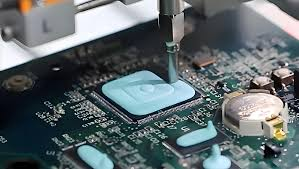



Both thermal grease and thermal gel are thermal interface materials, presenting a paste-like consistency that often leads to confusion, with some even believing they differ only in name. In reality, significant distinctions exist between them. Thermal grease represents a traditional, commonly used category within thermal interface materials, whereas thermal gel is a newer material that has gained prominence in recent years. The following provides a detailed analysis of their differences.
Thermal gel is a high-viscosity thermal interface material manufactured by thoroughly blending multiple heat-transfer powders with thermally conductive silicone, processed under vacuum conditions. It contains no residual bubbles and is typically packaged in syringes. It exhibits minimal solidification, maintaining a paste-like consistency over extended periods within the temperature range of -40°C to +200°C. It offers excellent thermal conductivity and electrical insulation, with extremely low oil separation rates, high resistance to extreme temperatures, moisture, and ageing. It requires minimal pressure for application between heat sinks and chips, and is reusable.
Thermal grease, also known as thermal paste or heat-dissipating silicone, primarily fills gaps between chips (such as CPUs and GPUs) and heat sinks. It compensates for air pockets (poor thermal conductors) in contact surfaces, accelerates heat transfer, protects electronic components, and extends their lifespan. Widely used between heating elements and cooling devices in various electronic and electrical equipment, it adapts to different application requirements but exhibits ageing over time.
Five core distinctions exist between the two:
In summary, thermal gel and thermal grease are distinct materials, each possessing unique advantages and suitable applications. Users should select the appropriate thermal interface material based on product characteristics and structural requirements.