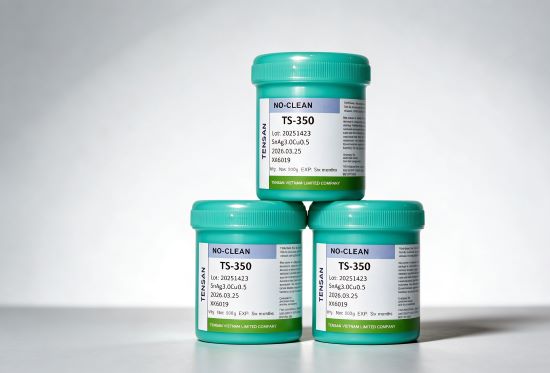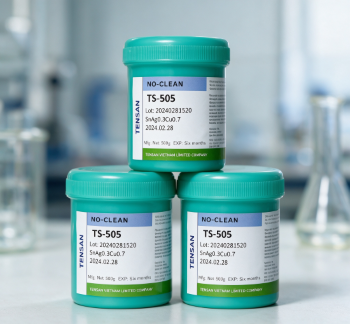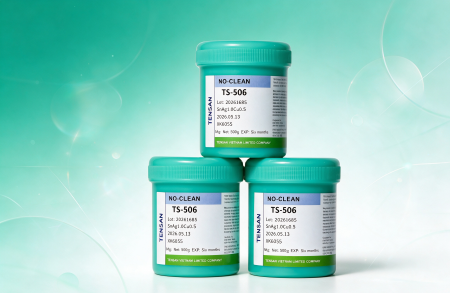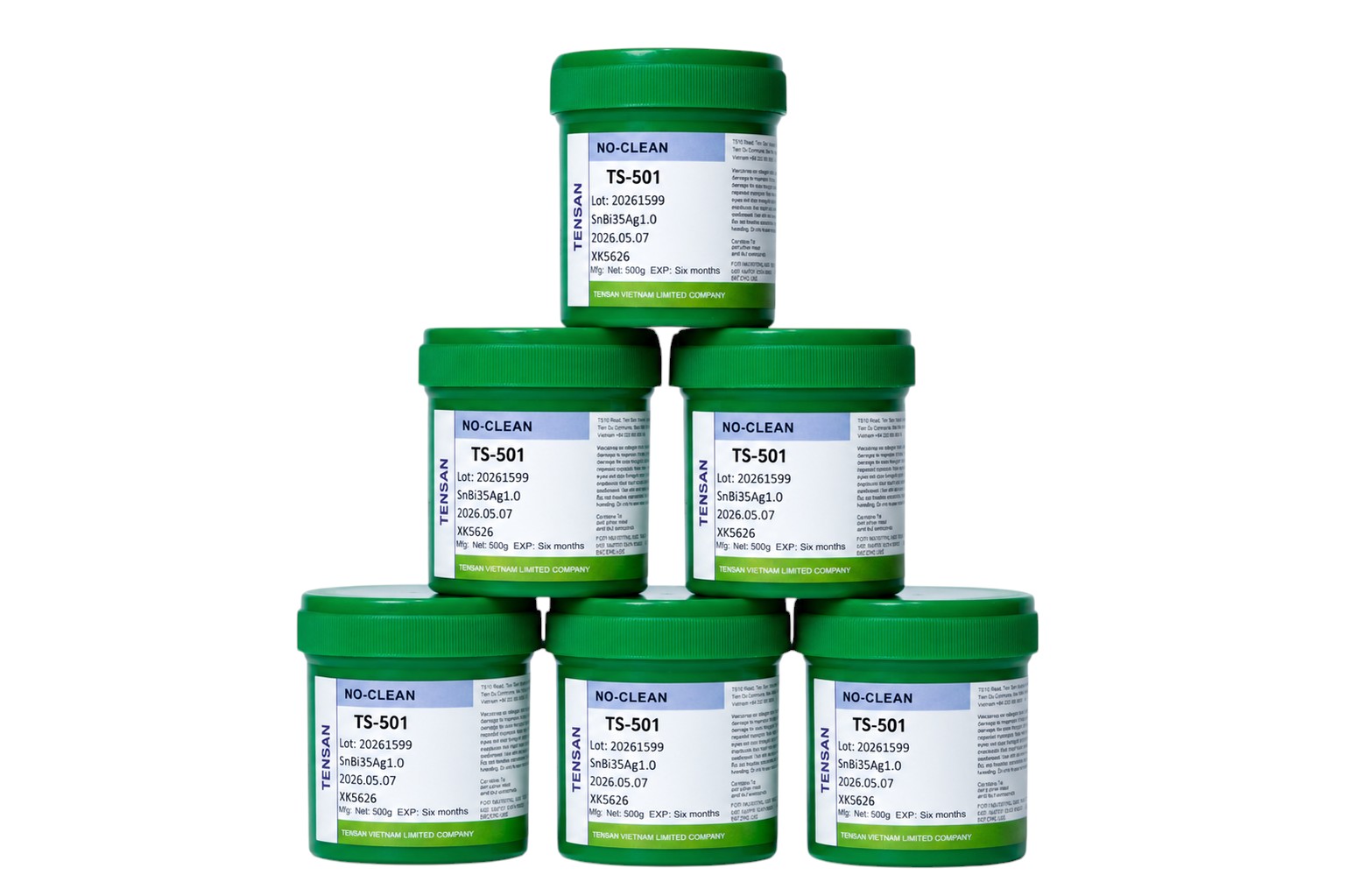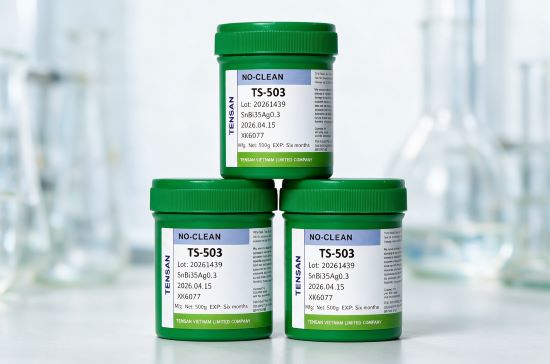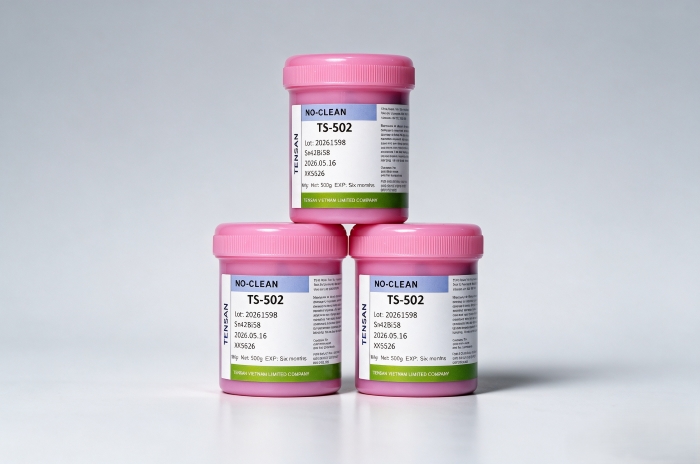

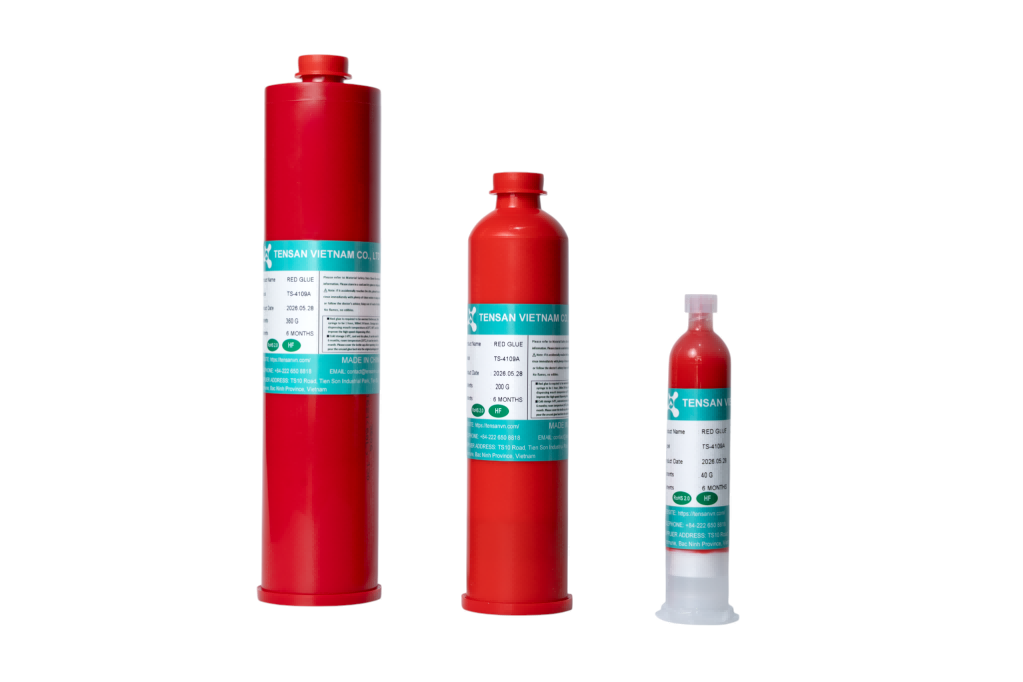


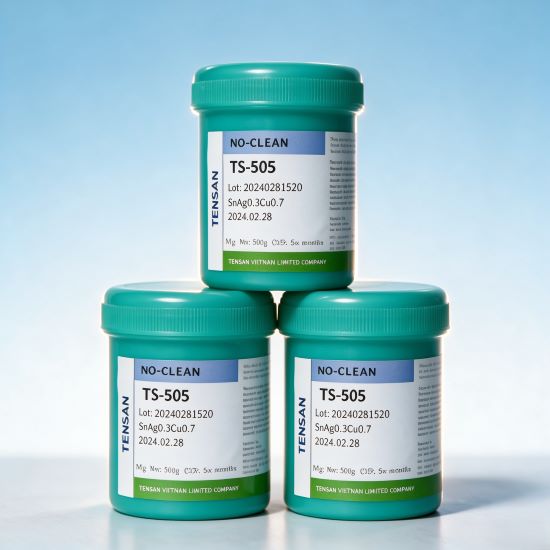
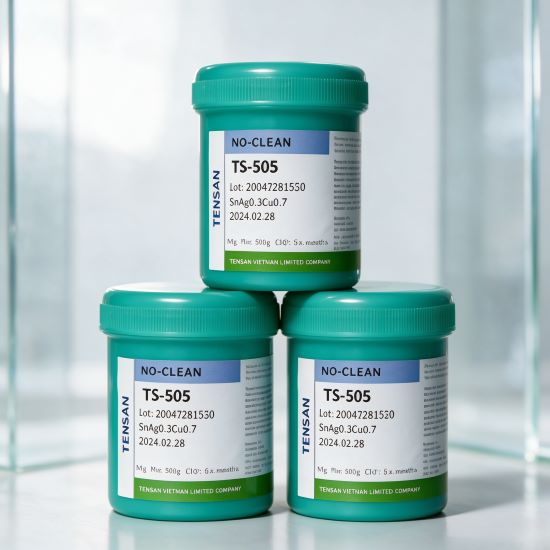
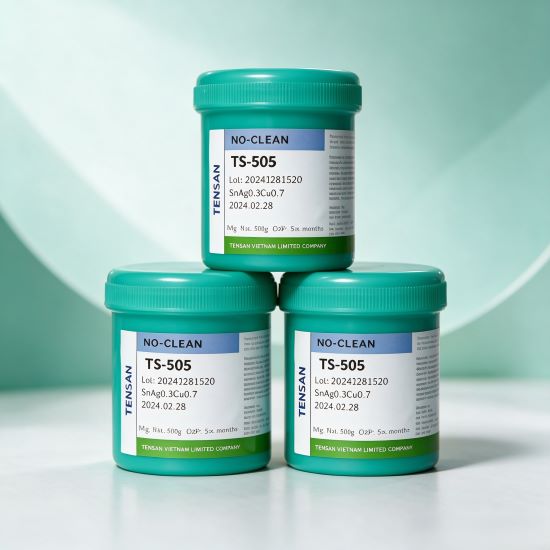
TS505 is a high‑temperature, lead‑free, no‑clean solder paste whose solder flux system has been meticulously engineered to meet these demanding requirements. Based on the Sn99Ag0.3Cu0.7 (SAC0307) alloy and featuring a halogen‑controlled solder flux (L1 level, 0.085% halogens), TS505 offers outstanding wettability, extremely low voiding, minimal residue, and excellent surface insulation resistance. This advanced solder flux formulation ensures that every production run – from consumer wearables to automotive ECUs – achieves high first‑pass yields and long‑term field reliability.
Superior Solder Flux Formulation for High-Reliability SMT Assembly
In any surface‑mount soldering process, the solder flux serves as the chemical backbone that determines wetting speed, void formation, residue behaviour, and long‑term reliability. While the alloy provides mechanical strength, it is the solder flux that enables the molten metal to spread, bond, and solidify into a reliable joint. A well‑balanced solder flux removes oxides, protects the cleaned surfaces during reflow, and leaves a benign residue that does not compromise electrical performance. For manufacturers seeking a no‑clean, lead‑free solution, the solder flux must be carefully formulated to deliver consistent results across varying board finishes, component types, and reflow conditions.
TS505 is a high‑temperature, lead‑free, no‑clean solder paste whose solder flux system has been meticulously engineered to meet these demanding requirements. Based on the Sn99Ag0.3Cu0.7 (SAC0307) alloy and featuring a halogen‑controlled solder flux (L1 level, 0.085% halogens), TS505 offers outstanding wettability, extremely low voiding, minimal residue, and excellent surface insulation resistance. This advanced solder flux formulation ensures that every production run – from consumer wearables to automotive ECUs – achieves high first‑pass yields and long‑term field reliability.
The Critical Role of Solder Flux in Modern Assembly
The solder flux is often underestimated, yet it performs three vital functions during reflow: chemical cleaning – removing oxides from the pad and component terminations; surface protection – preventing re‑oxidation during heating; and wetting enhancement – reducing surface tension to promote spreading and capillary flow. A poor solder flux can lead to head‑in‑pillow defects, excessive voiding, solder balling, or conductive residues that cause leakage currents.
TS505 incorporates a solder flux that has been optimised for the SAC0307 alloy, ensuring that activation occurs at the correct temperature window. This solder flux is robust enough to handle mildly oxidised surfaces (such as OSP‑coated pads) yet gentle enough to leave a dry, hard, non‑tacky residue that supports in‑circuit testing without cleaning. The halogen content is controlled to L1 level, meeting low‑halogen requirements while maintaining excellent wetting performance.
Product Specifications
Alloy Composition
Core Advantages Driven by the Solder Flux
1. Excellent Wetting and Solder Wicking
The solder flux in TS505 is activated during the preheat and soak stages, effectively removing oxides from both the PCB pads and component terminations. This solder flux maintains its activity through the reflow peak, ensuring rapid spreading and strong capillary climb. As a result, TS505 produces bright, full fillets on all common surface finishes – ENIG, OSP, HASL, immersion silver, and even mildly oxidised surfaces. The excellent wetting provided by this solder flux reduces the risk of open joints and improves mechanical strength.
2. Low Voiding – Enhanced by Optimised Flux Chemistry
Void formation is directly influenced by the solder flux formulation – particularly its ability to allow volatile by‑products to escape before solder solidification. TS505's solder flux is engineered to provide a balanced outgassing profile, minimising trapped gas bubbles in the joint. This is especially critical for large thermal‑mass components such as QFN, LGA, and thermal pads, where high void fractions can impair thermal dissipation and cause premature failure. With TS505, the solder flux ensures void fractions consistently below industry thresholds.
3. Minimal, Non‑Conductive Residue
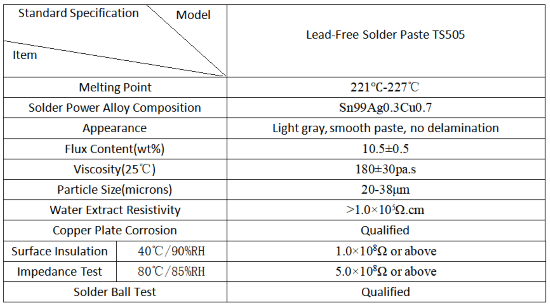
After reflow, the solder flux leaves a dry, translucent residue that is hard and non‑tacky. This residue has been verified through rigorous testing to be non‑conductive, with Surface Insulation Resistance (SIR) values comfortably exceeding requirements at both 40°C/90% RH and 80°C/85% RH. The solder flux residue does not absorb moisture or support dendritic growth, making TS505 ideal for no‑clean processes. Furthermore, the residue is probe‑friendly, allowing reliable ICT (In‑Circuit Test) without any cleaning step, reducing both cycle time and cost.
4. Outstanding Print Performance – Enabled by Flux Rheology
The solder flux in TS505 is formulated with advanced rheological modifiers that impart excellent thixotropic behaviour. This ensures that the paste rolls smoothly on the stencil, transfers cleanly through apertures, and holds its shape after printing. The solder flux also controls the paste's viscosity stability, preventing shear degradation during long production runs. As a result, TS505 delivers consistent deposit geometry, even on fine‑pitch pads down to 0.4 mm, with minimal slump and extended stencil life.
5. Wide Reflow Process Window
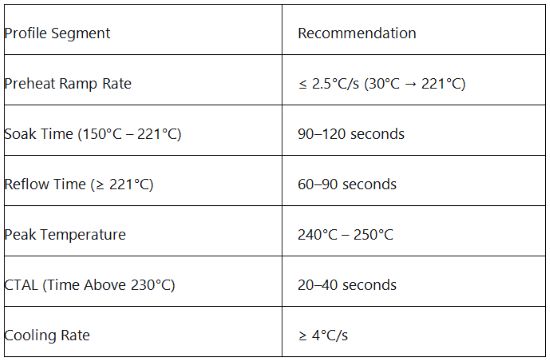
Because the solder flux is designed to activate gradually, TS505 can accommodate a broad range of reflow profiles. This flexibility allows manufacturers to use the same solder flux for different board thicknesses, component densities, and oven types, reducing the need for process re‑optimisation. The recommended profile ensures that the solder flux reaches full activation during the soak and reflow stages without premature consumption.
Processing Guidelines – Maximising Solder Flux Performance
Printing Parameters
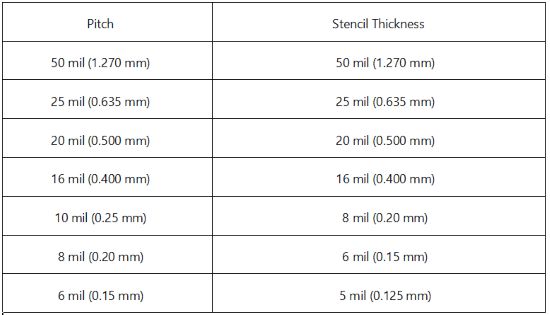
Stencil Thickness Guidelines
Typical Applications
TS505, with its advanced solder flux, is ideal for:
Quality Assurance
Each batch of TS505 is accompanied by a Certificate of Analysis that verifies:
Consistent solder flux quality is guaranteed through rigorous lot‑to‑lot testing, giving you confidence in every production run.
Frequently Asked Questions
Q: What makes the solder flux in TS505 different from other no‑clean fluxes?
A: The solder flux in TS505 is halogen‑controlled (L1 level, 0.085%) and optimised for SAC0307, providing excellent wetting, low voiding, and a dry, non‑conductive residue that supports ICT without cleaning.
Q: Can this solder flux handle OSP‑coated boards?
A: Yes, the solder flux is formulated to remove oxides from OSP and other finishes, ensuring reliable wetting even on mildly oxidised surfaces.
Q: Does the solder flux leave a residue that affects probe testing?
A: No. The residue from this solder flux is dry, hard, and translucent, allowing reliable ICT probing with minimal false failures.
Q: Is the solder flux compatible with both air and nitrogen reflow?
A: Absolutely. The solder flux performs consistently in both atmospheres, providing excellent wetting and void control in either environment.
Q: How long can the solder flux maintain its activity on the stencil?
A: Under standard conditions (20–25°C, RH <65%), the solder flux maintains its rheological properties and activity for a full shift, reducing cleaning frequency.
Conclusion
The solder flux is the heart of any solder paste – it determines wetting, voiding, residue, and reliability. TS505 features a superior solder flux that has been developed to meet the challenges of modern SMT assembly: fine‑pitch printing, mixed‑finish boards, and no‑clean requirements. With its halogen‑controlled chemistry, excellent wetting, low voiding, and clean residue, this solder flux ensures high first‑pass yields and long‑term field performance.
By choosing TS505, manufacturers benefit from:
For engineers and production managers seeking a robust, high‑quality solder flux solution for lead‑free assembly, TS505 is the proven choice.
Contact Information
TENSAN VIETNAM CO., LTD
TS10 Road, Tien Son Industrial Park, Bac Ninh Province, Vietnam
Tel: +84‑222‑650‑8818
Email: mark@sztensan.com
For custom flux formulations, alternative alloys, or packaging options, please contact your local Tensan representative.