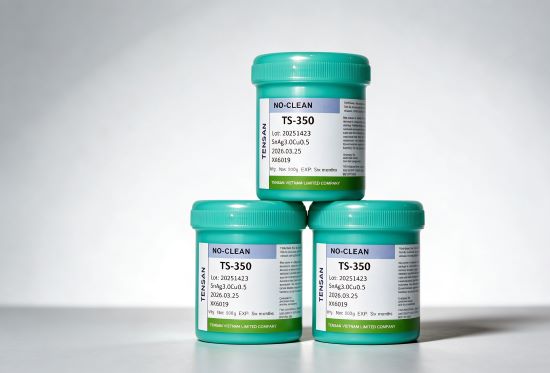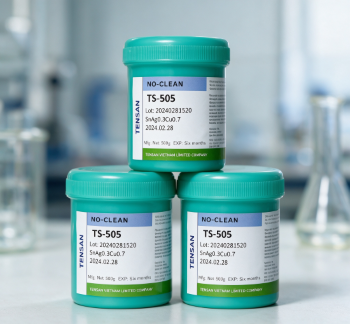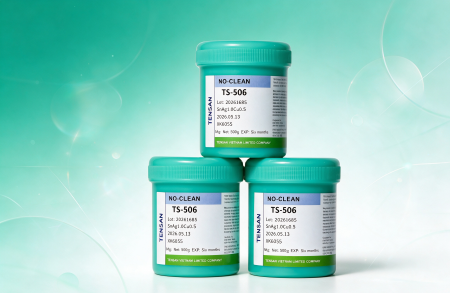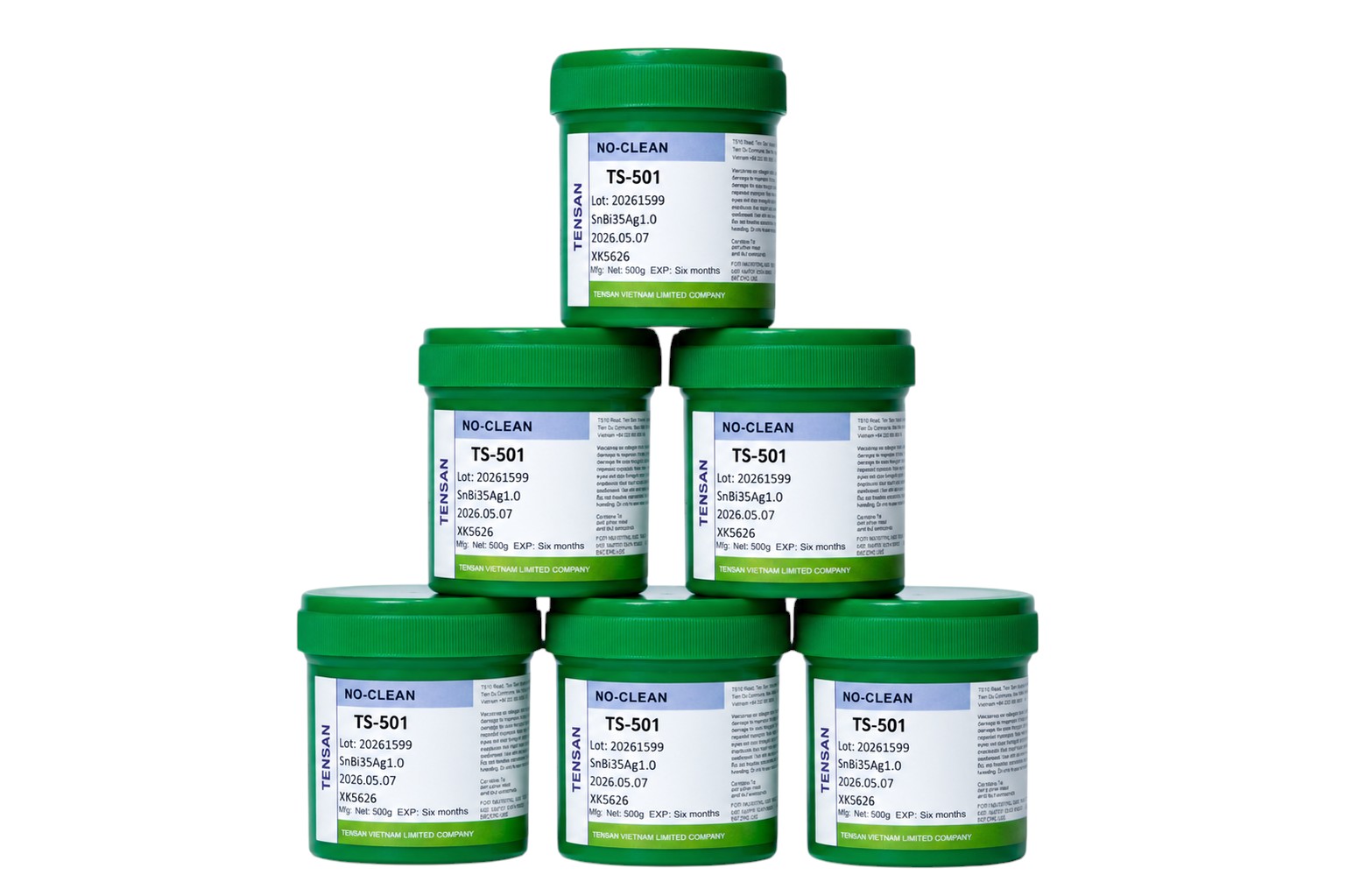



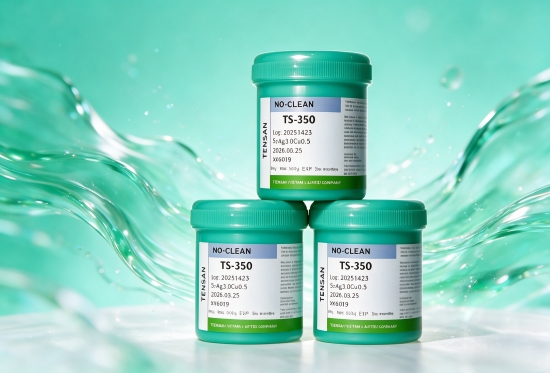
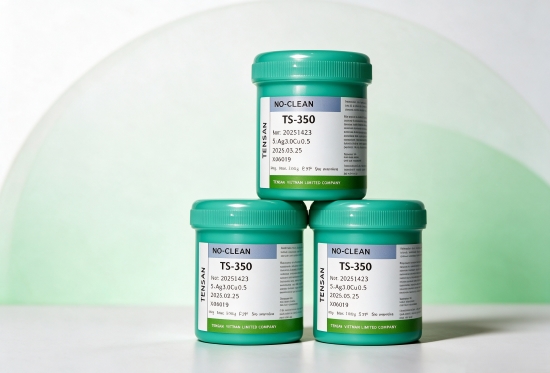
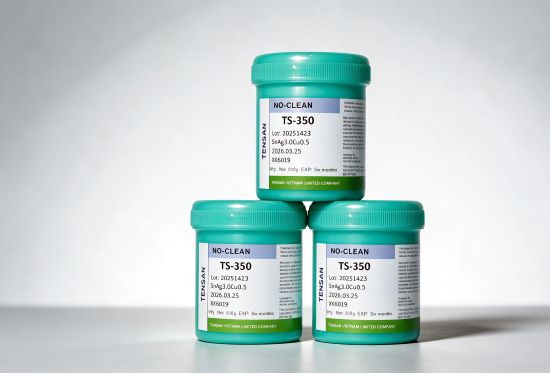
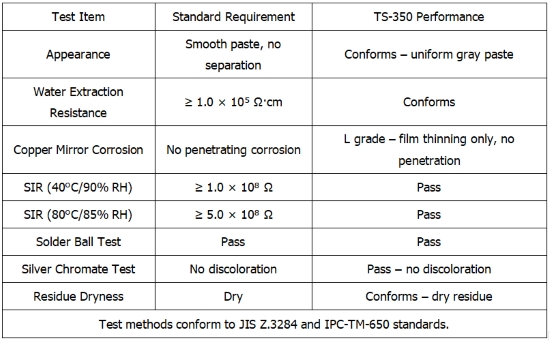
TS‑350 is a lead‑free, no‑clean solder paste type formulated with the Sn96.5Ag3Cu0.5 (SAC305) alloy. It is engineered for demanding SMT applications where fine‑pitch printing (down to 0.25 mm / 10 mil) and high‑reliability soldering are essential. This solder paste type delivers outstanding print stability, with a viscosity of 220,000 ± 30,000 mPa·s at 25 °C and excellent slump resistance. Its advanced flux chemistry ensures rapid, complete wetting on various surface finishes, resulting in low voiding and strong resistance to head‑in‑pillow (HiP) defects – particularly beneficial for QFN and BGA assemblies. After reflow, the residue is minimal (~5 % w/w), dry, and non‑conductive, passing stringent SIR tests at both 40 °C/90 % RH and 80 °C/85 % RH. The residue is ICT‑friendly, allowing direct electrical testing without cleaning.
Choosing the Right Solder Paste Type for Modern SMT Assembly
The electronics manufacturing industry moves at breakneck speed, and every surface‑mount line contends with the same pressures: flawless print repeatability, minimal soldering defects, and maximised first‑pass yields. As component footprints shrink and board layouts grow denser, the solder paste type you select has a direct impact on throughput, quality, and long‑term reliability.
TS‑350 represents a leading solder paste type that answers these demands. It is a lead‑free, no‑clean formulation built for manufacturers who need ultra‑fine pitch capability without sacrificing wetting performance or joint integrity. Whether you are running high‑volume production or performing precision rework, this particular solder paste type offers the rheological stability, process consistency, and wetting characteristics that today’s SMT lines require.
What Defines an Outstanding Solder Paste Type?
A superior solder paste type must balance several conflicting requirements: adequate flux activity, stable viscosity over hours of printing, minimal slump, and clean residue after reflow. TS‑350 achieves this equilibrium through a carefully designed flux chemistry that works seamlessly with the SnAgCu alloy system. It is widely adopted as a bridge between legacy SnPb processes and modern lead‑free assembly, delivering reliable printing even on challenging 0.25 mm (10 mil) pitch pads.
This solder paste type combines advanced rheology with robust flux activation, making it suitable not only for standard SMT components but also for QFN, BGA, and other fine‑pitch devices down to 11 mil (0.28 mm) square pads.
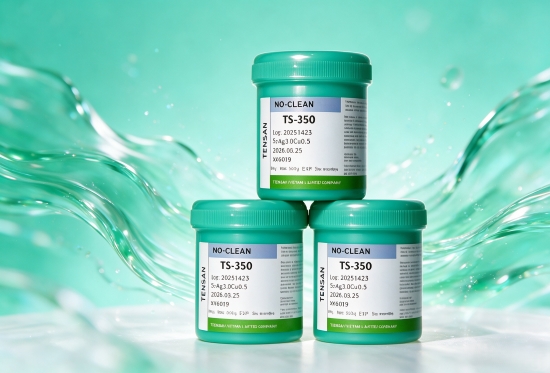
Product Specifications
Alloy Composition
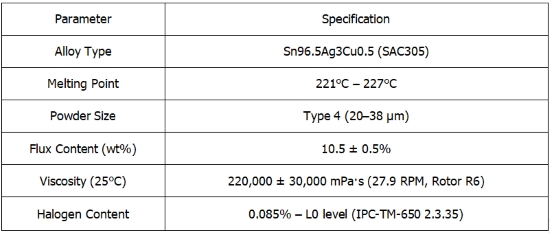
Physical & Electrical Properties
Core Advantages of This Solder Paste Type
1. Print Performance that Drives Productivity
Every solder paste type must withstand the mechanical stress of repetitive printing. TS‑350 excels in this area:
2. Wetting and Soldering Quality
Wetting behaviour is the hallmark of a reliable solder paste type. TS‑350’s flux system promotes rapid oxide removal and thorough spreading on various board finishes.
3. Minimal, Non‑Conductive Residue
After reflow, this solder paste type leaves only about 5% (w/w) of dry, translucent residue. This residue:
4. Exceptional Resistance to Head‑in‑Pillow (HiP) Defects
HiP defects are a known challenge with BGA and QFN assemblies. TS‑350 is specifically formulated to mitigate this failure mode, helping you achieve higher first‑pass yields during in‑line testing.
5. Full RoHS Compliance
This solder paste type meets all requirements of RoHS Directive 2002/95/EC, ensuring unrestricted export to regulated markets.
Storage and Handling Guidelines
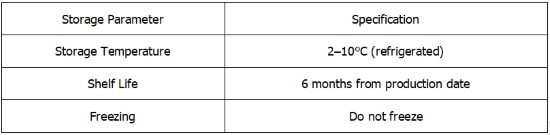
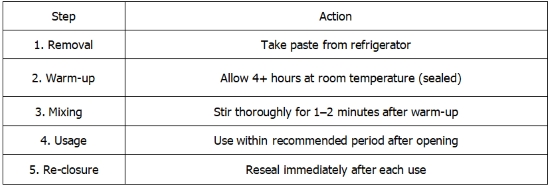
To preserve the performance of this solder paste type, follow these recommendations:
Storage Conditions
Handling Procedure
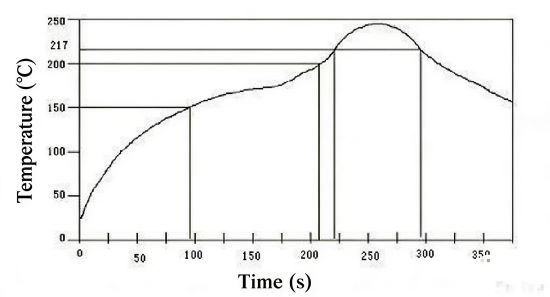
Recommended Reflow Profile
Quality Assurance
Every batch of this solder paste type is supplied with a Certificate of Analysis (CoA) that verifies:
Our rigorous quality system ensures lot‑to‑lot consistency, so you can rely on the same performance every time.
This solder paste type is ideal for:
Frequently Asked Questions
Q: Is this solder paste type suitable for both standard and fine‑pitch printing?
A: Yes. TS‑350 performs equally well on 0.5 mm pitch and ultra‑fine 0.25 mm (10 mil) pitch applications.
Q: What stencil technology works best?
A: Laser‑cut, electro‑polished stainless steel stencils (e.g., ALPHA® Stencils) are recommended for optimal release and deposit fidelity.
Q: Can this solder paste type be used for paste‑in‑hole (PiH) processes?
A: Absolutely. Its stable rheology and flux activity support PiH applications.
Q: How long can the paste remain on the stencil?
A: Under normal shop‑floor conditions, TS‑350 maintains print quality throughout a full shift. Always reseal any unused paste promptly.
Conclusion
Selecting the correct solder paste type is one of the most impactful decisions in SMT assembly. TS‑350 delivers on every front: stable printing, superior wetting, low residue, and proven reliability across a broad range of applications.
By choosing this solder paste type, you can expect:
For manufacturers seeking a robust, lead‑free solution that bridges legacy and advanced processes, TS‑350 remains a proven, trusted choice.
Contact Information
TENSAN VIETNAM CO., LTD
TS10 Road, Tien Son Industrial Park, Bac Ninh Province, Vietnam
Tel: +84‑222‑650‑8818
Email: mark@sztensan.com
For enquiries about alternative alloys, custom powder sizes, or special packaging, please contact your local Tensan sales representative.