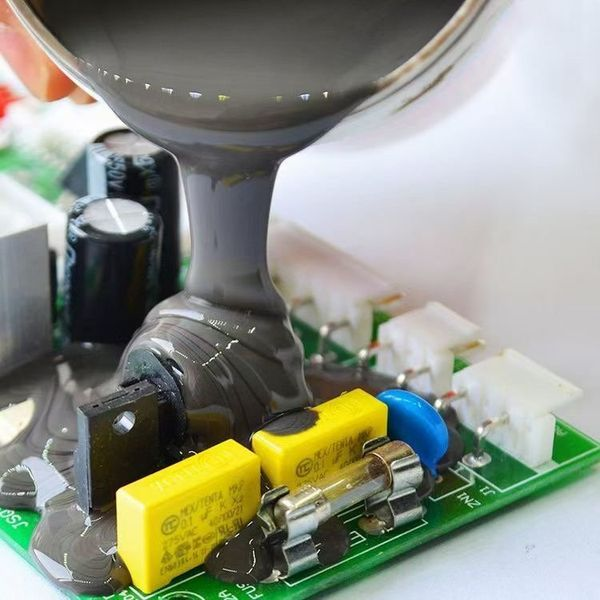



Thermal conductive encapsulants and thermal conductive greases are widely used adhesives in electronic products. They not only provide efficient heat dissipation but also offer waterproofing, moisture resistance, and excellent insulation. The protection provided by these thermal materials improves the stability, performance, and lifespan of electronic products.
Thermal conductive encapsulants are suitable for various electronic devices working in harsh environments, as well as high-end precision/sensitive electronic components. Applications include automotive electronics and modules, LED power driver modules, solar panel junction boxes, electric vehicle charging pile modules, lithium battery packs, capacitor banks, magnetic coils, and inverters. They enhance the waterproof, shock resistance, and heat dissipation capabilities of electronic products, protecting them from environmental corrosion and extending their service life.
High thermal conductivity silicone encapsulant solutions for electronic products: Before curing, the thermal conductive electronic encapsulant is in liquid form and has fluidity. The viscosity of the adhesive varies depending on the product's performance, materials, and manufacturing process. The thermal conductive electronic encapsulant only achieves its full value after complete curing. After curing, it provides waterproofing, moisture resistance, confidentiality, corrosion resistance, dust protection, insulation, temperature resistance, and shock resistance. So, what performance requirements must electronic encapsulants for electronic components meet?
For the encapsulation of electronic products, silicone-based potting compounds are generally used. Silicone potting compounds can incorporate functional fillers to impart properties such as electrical conductivity, thermal conductivity, and magnetic properties. Silicone potting compounds generally have relatively low mechanical strength, and this property is utilized to make them "breakable," facilitating repair. If a component malfunctions, the potting compound can simply be pried open, the faulty component replaced, and the device can then be used again.
Shenzhen TENSAN produces thermal conductive potting compounds primarily based on silicone resins, offering perfect solutions for various thermal management problems in electronic products and meeting customers' increasingly demanding requirements for thermal performance.