


In the manufacturing industry, thermal paste is a commonly used material that possesses both heat dissipation and insulation properties, belonging to the category of heat-dissipating and non-conductive functional materials. This material requires precise application techniques, with thin and even application being the core principle. Based on this, this article will explain the dangers of excessive thermal paste application and provide corresponding solutions.
I. Dangers of Excessive Thermal Paste Application
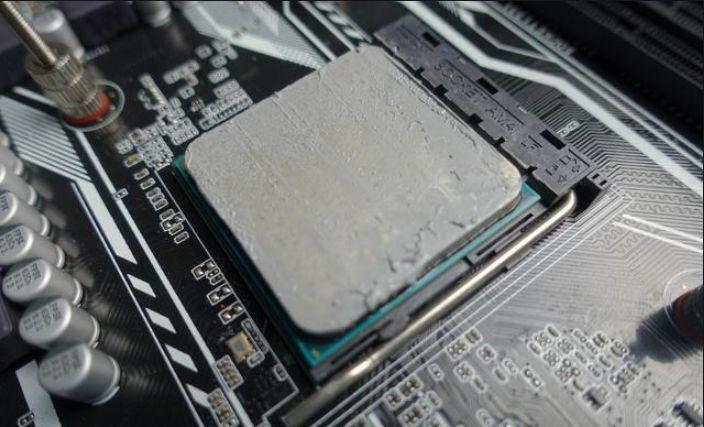
The application of thermal paste requires strict control of thickness; under normal circumstances, the application thickness should not exceed 3 millimeters. If this thickness standard is exceeded, during equipment operation, heat energy will easily accumulate on the surface of heat-generating components such as the CPU, and cannot be quickly transferred to the heat dissipation structure, leading to a significant decrease in heat dissipation efficiency. Conversely, if the application is too thin, an effective heat conduction channel cannot be established, failing to achieve the heat dissipation function and rendering the material useless.
During the assembly of electrical heating elements and heat dissipation facilities, fastening with bolts is required to ensure proper contact. If excessive thermal paste is applied, the excess paste will overflow under the fastening pressure. If the overflowing paste contacts the printed circuit board (PCB), it usually does not cause significant adverse effects; however, if it flows to the vicinity of exposed contacts, it can easily cause a conductive risk, leading to short circuits, equipment malfunctions, and other problems.
II. Solutions for Excessive Thermal Paste Application
Thermal paste itself is not adhesive. If excessive application occurs, a professional tool such as a scraper can be used to remove the excess paste from the surface. Then, a thin and even layer of thermal paste can be reapplied to the surface of the heat-generating component (such as the CPU) and the bottom of the heat sink to restore normal functionality.
III. Application Fields of Thermal Paste
Thermal paste has a wide range of applications, including routers, automotive electronics, sensors, graphics cards, communication equipment, LED devices, integrated lighting fixtures, televisions, heat sinks, rice cookers, water heaters, electric vehicles, computers, induction cookers, and various power supplies, controllers, and other equipment and components.
Currently, thermal paste products on the market have different application areas; some are suitable for CPUs, while others are suitable for general electrical equipment. Choosing products without application field limitations enhances adaptability and safety of use. For example, the TENSAN brand, which specializes in the research and development of thermal conductive silicone grease, offers customized thermal conductive silicone grease application solutions. Their products have a wide range of applications and can meet the needs of various industries, including new energy, military, medical, aerospace, marine, electronics, automotive, instrumentation, power supply, and high-speed rail.